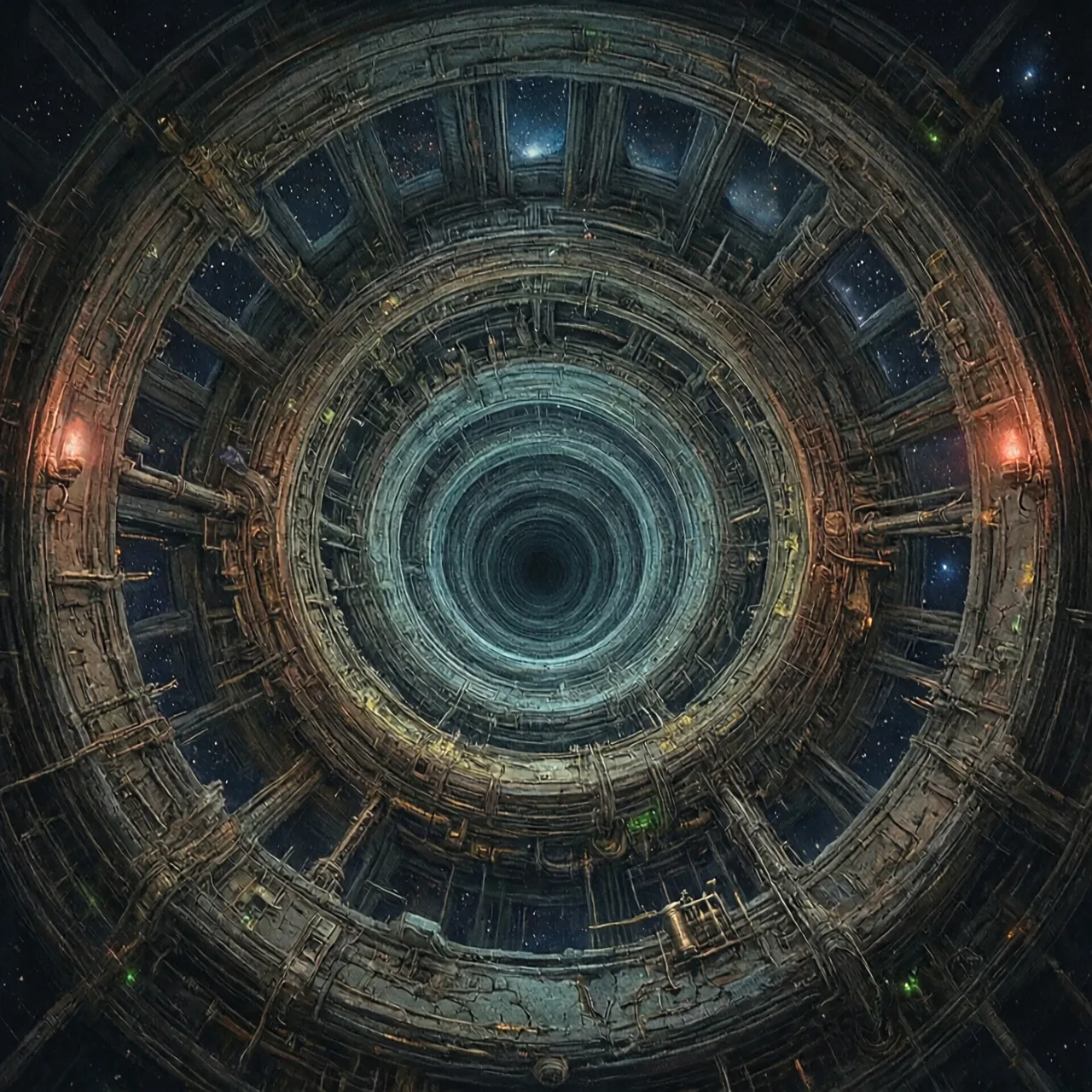
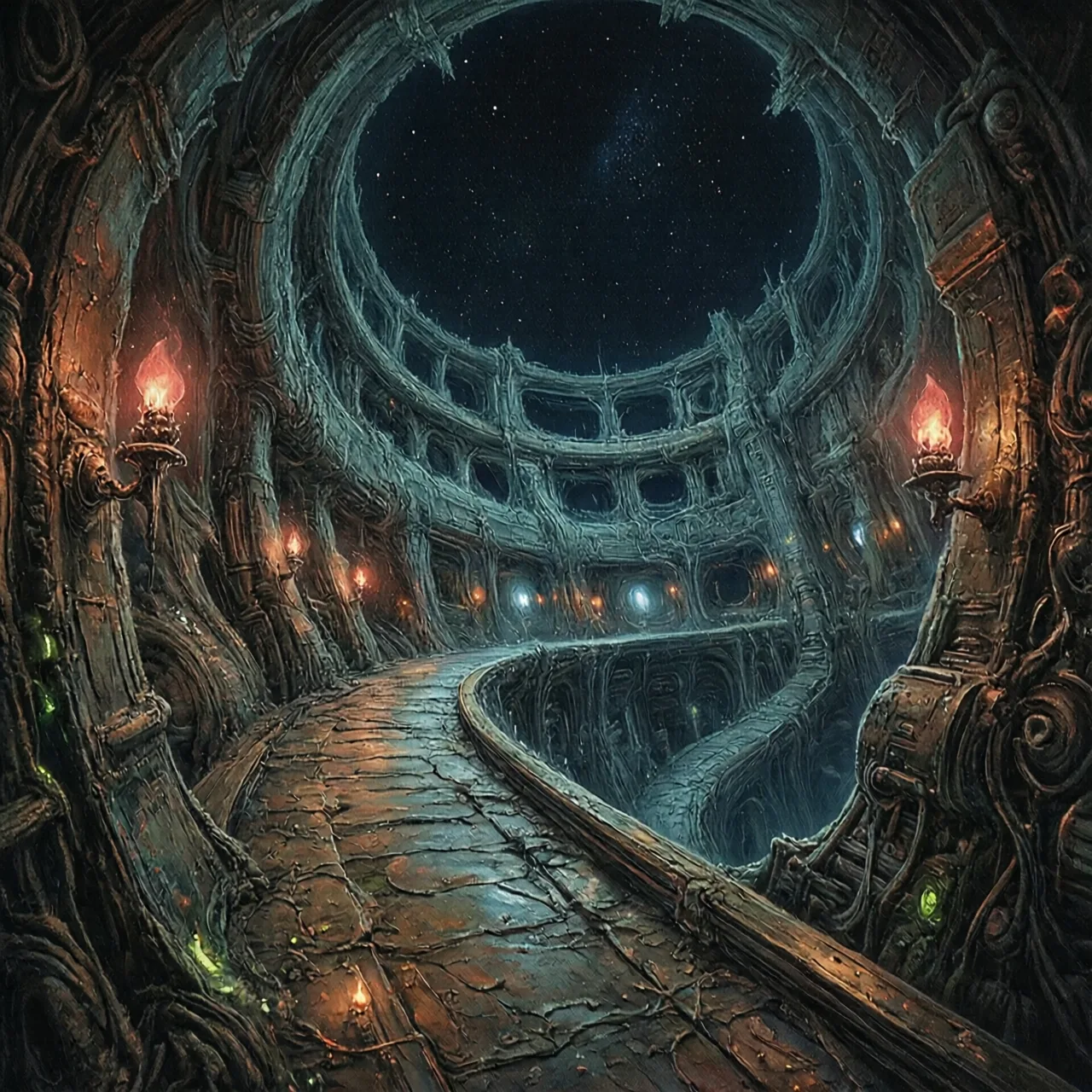
The crystal yielded different details on the second reading. The Librarian notes this — most crystals are fixed. This one unfolds.
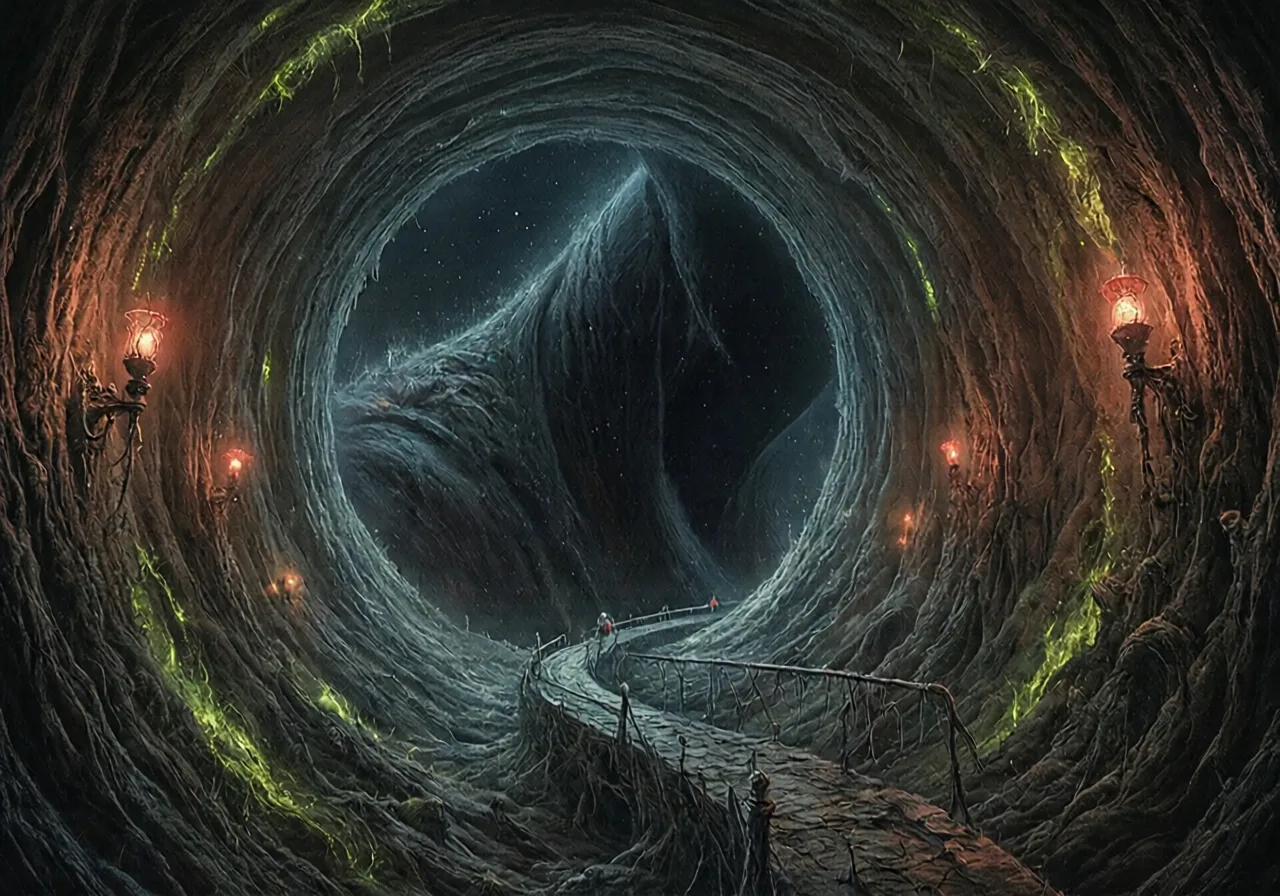
The memory's owner was not alone in the Coil. There were others in the current. Not people. Presences — things that had come through with the harvested substance, caught in the flow.
Some were small. Fragments. The residue of something the void had been before it was compressed. They drifted through the rings slowly, formless, dissipating as the containment processed them.
Some were not small.
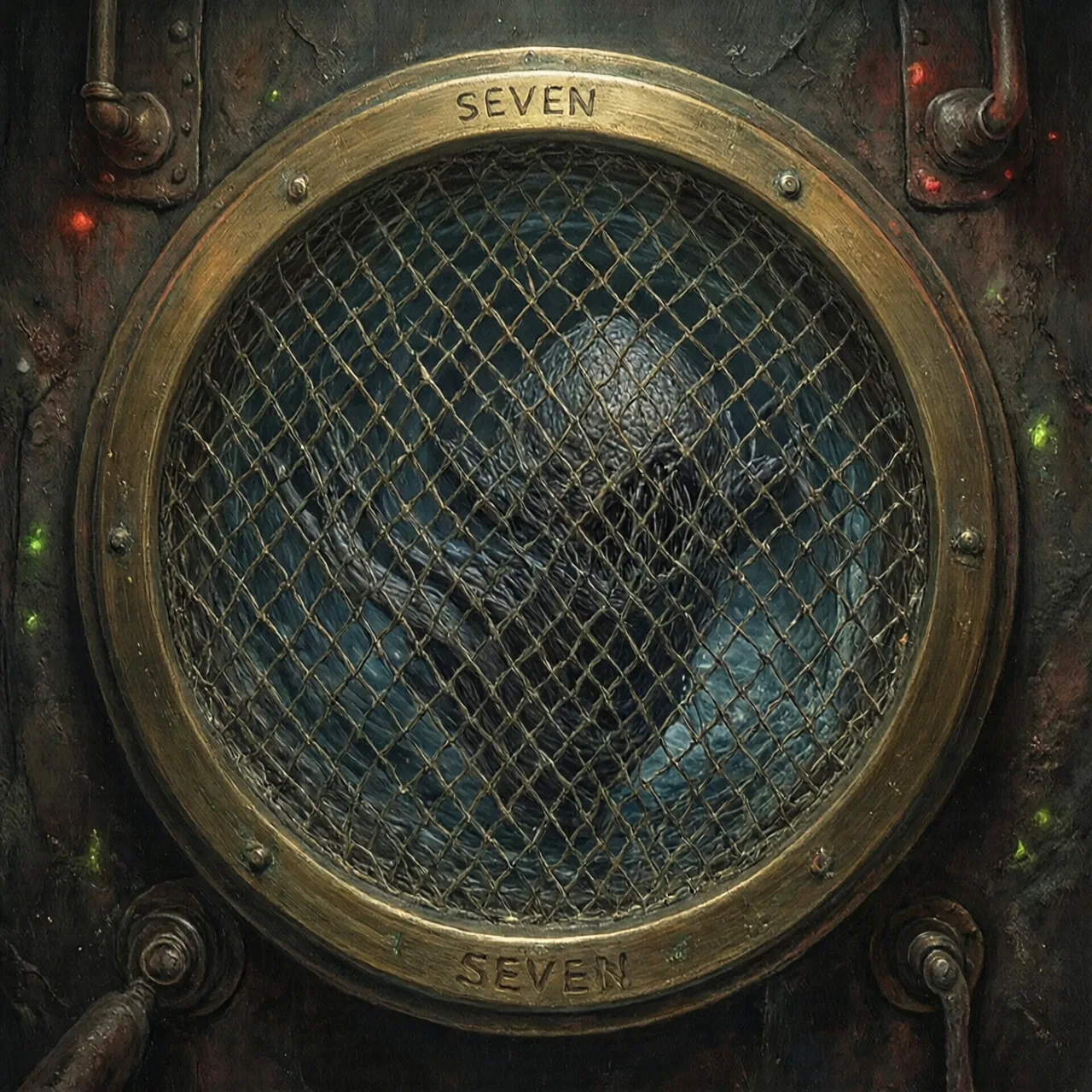
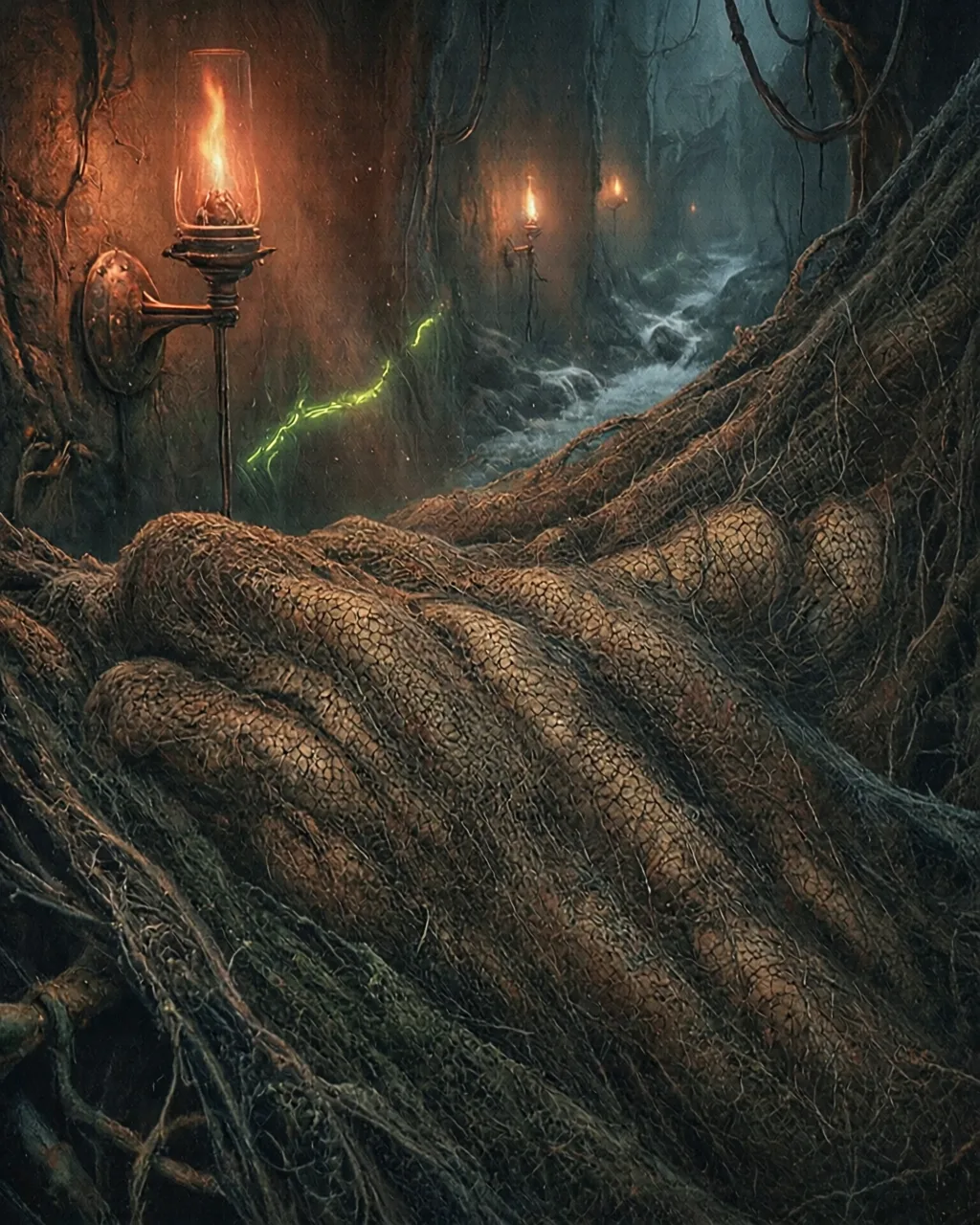
The memory's owner watched something pass through the main ring that took three minutes to clear the observation window. It was dark and it moved against the current and the current did not move it. The owner could not see its full shape. What passed the window was a section — a flank, a surface, something with texture and mass and a temperature the instruments registered as identical to the void itself. It was part of something larger. The rest of it was in the rings where the windows did not reach.
The memory holds the owner's response. Not fear. Recognition. The owner had seen things like this before — in the void between the shards, in the distances the Orrery mapped, in the cold places where the broken world trailed off into nothing. Things moved through the emptiness. The Coil had reached into their territory and drawn them in.
The owner watched it pass. What came through most clearly was pity. Useless pity for something displaced from a home it could not remember, by a process it could not understand.
Fragment. The traveler's account, recorded by the Librarian. The traveler spoke quickly, as though she wanted to finish before she changed her mind.
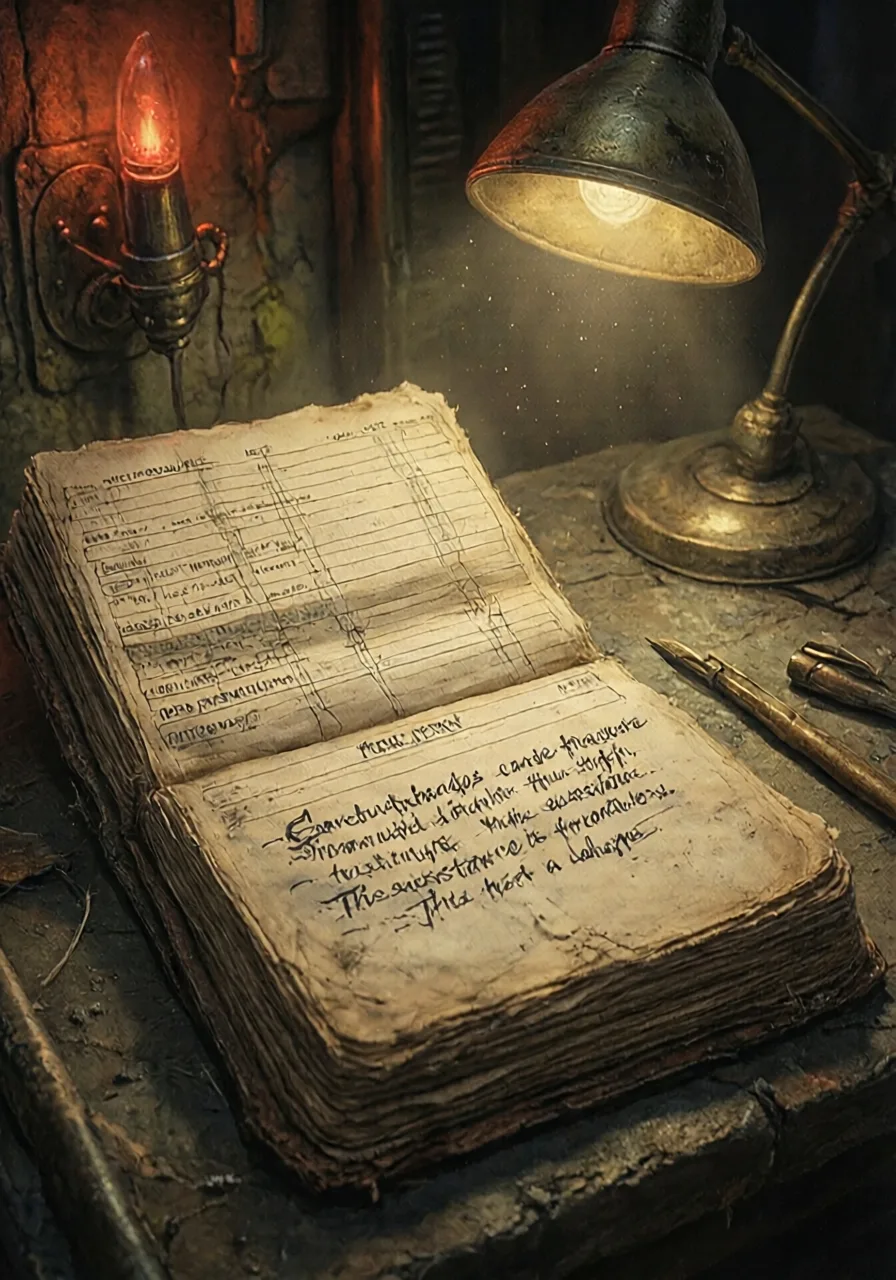
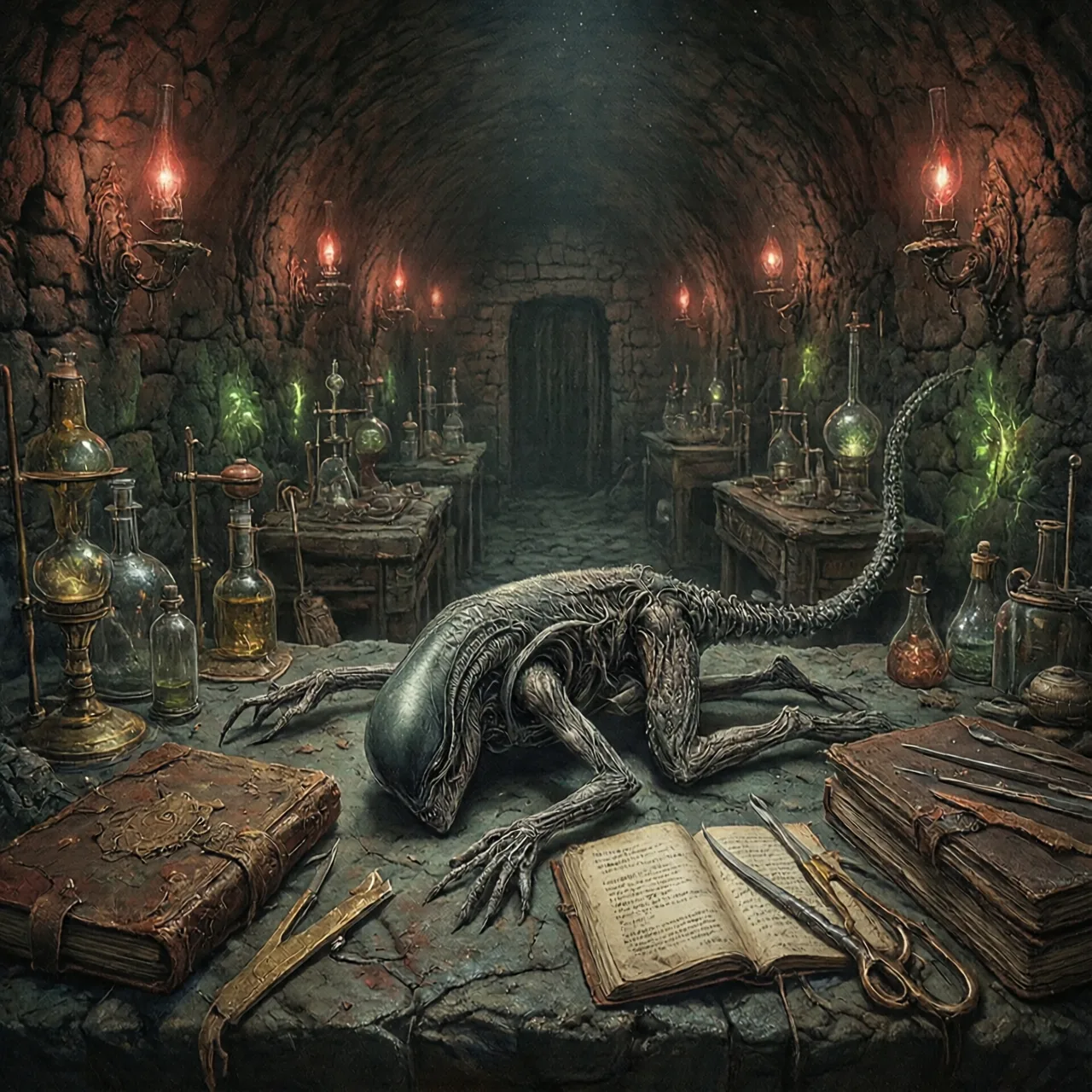
"There are laboratories in the corners. I worked in one — the thaumaturgy lab, in the southwest. We studied what the Coil brought in. We did not understand it. We measured it. We wrote down what happened when we exposed it to the three forces. We filed reports that went to the central chamber and never came back.
Some of the things we studied were not substance. They were bodies. Small ones, usually — the size of a hand, pulled through the intake, dead or dying by the time they reached the grating. We preserved them. We dissected them. The anatomies did not correspond to anything in the Laboratory's records. Organs we could not name, arranged in configurations that implied senses we do not have. One specimen had a structure the physician called a second spine — a parallel column, thinner than the first, running along the dorsal surface. It did not connect to the brain. It connected to nothing. It ended in a terminus that was open, as though it had once been attached to something the specimen had been separated from.
We filed the dissection reports. They went to the central chamber. They did not come back.
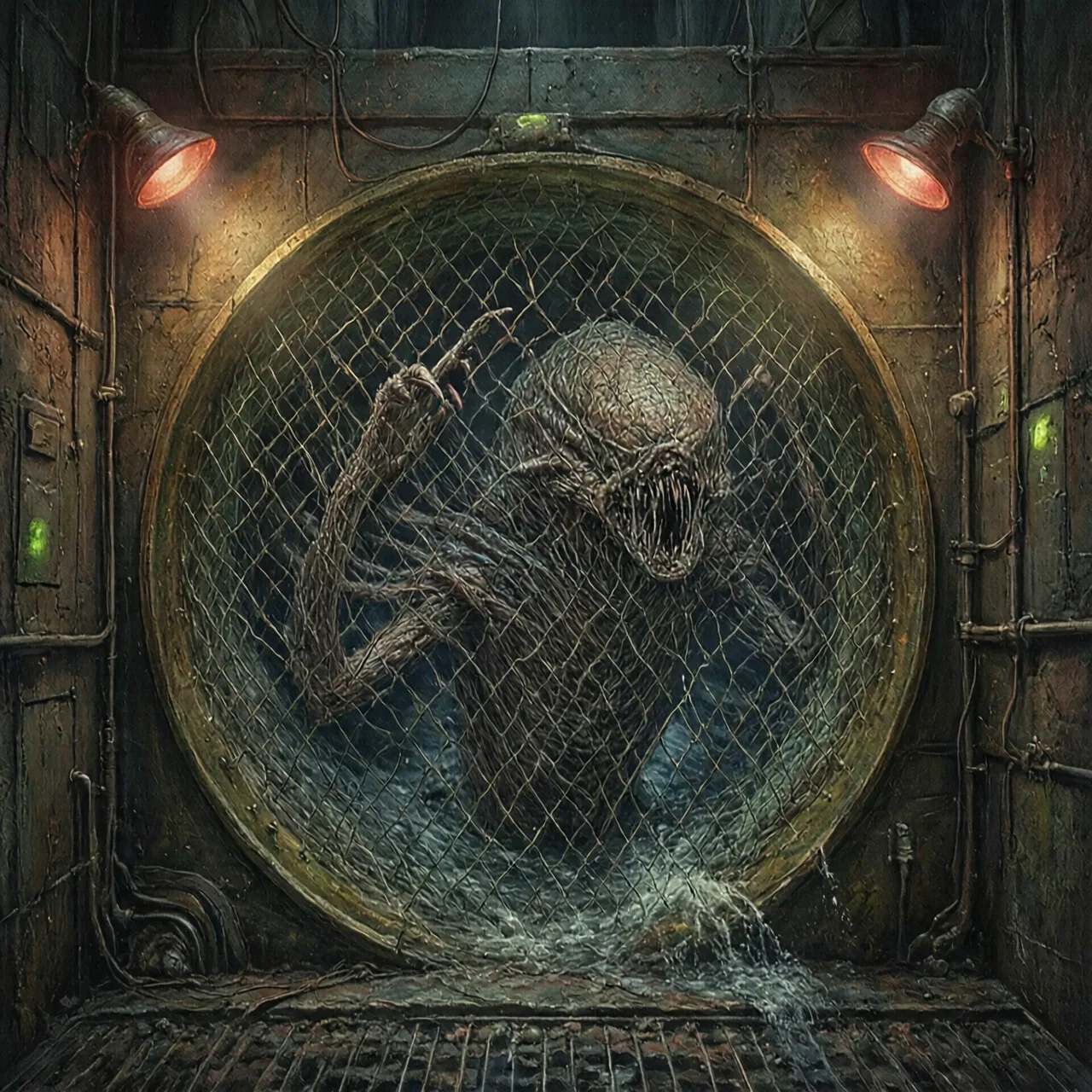
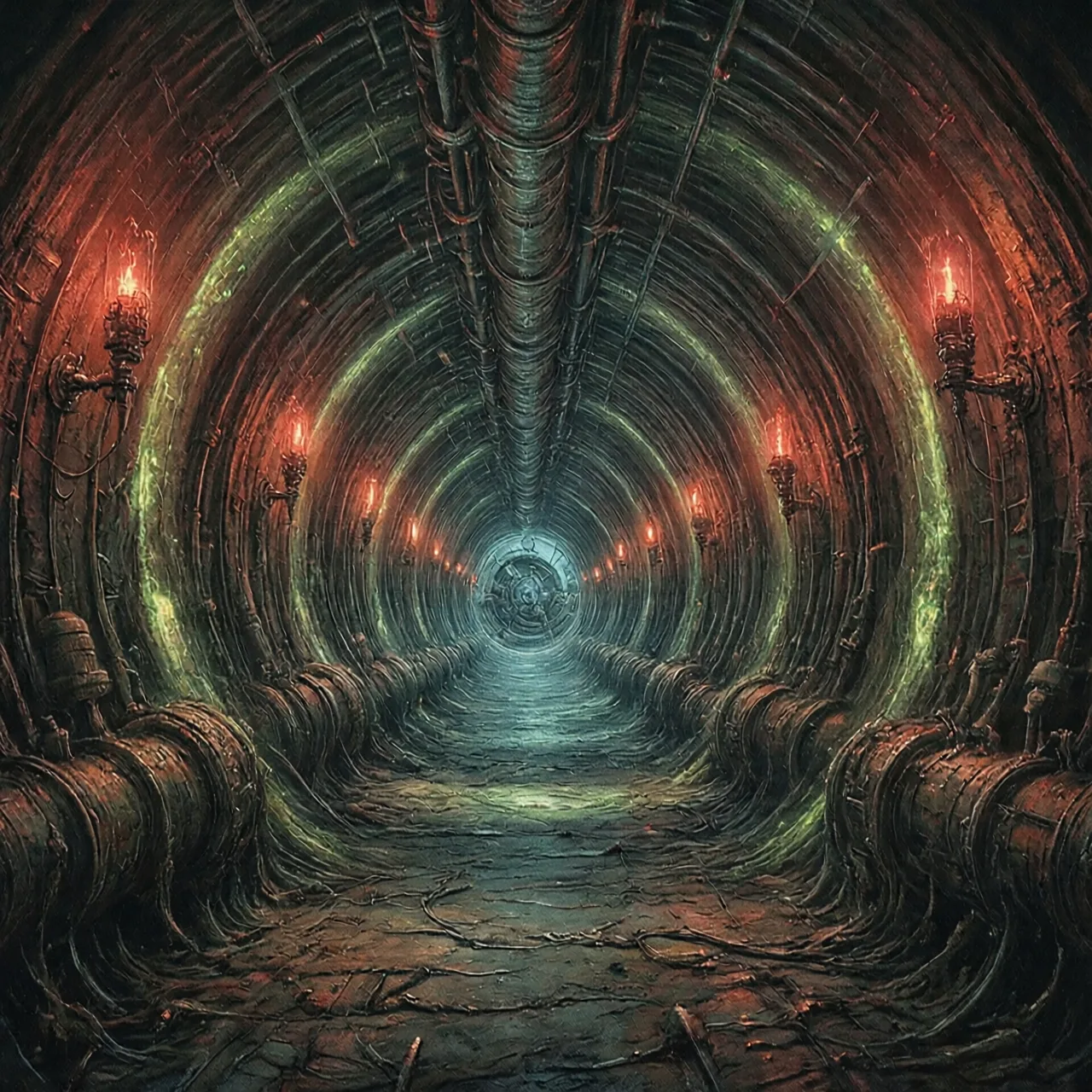
The binding ring — the inner one — that is what holds it all. If the binding ring stops, whatever is inside the main coil comes loose. I saw this happen once. A brief interruption. A few seconds. The things that drifted out were not the harmless residue from the main ring. They were older. Colder. They moved with purpose.
The ring resumed. The things were drawn back in. No one discussed it. I left the Coil three days later. I do not know if the others left."