All Comics
Entry 3,407

THE SONG

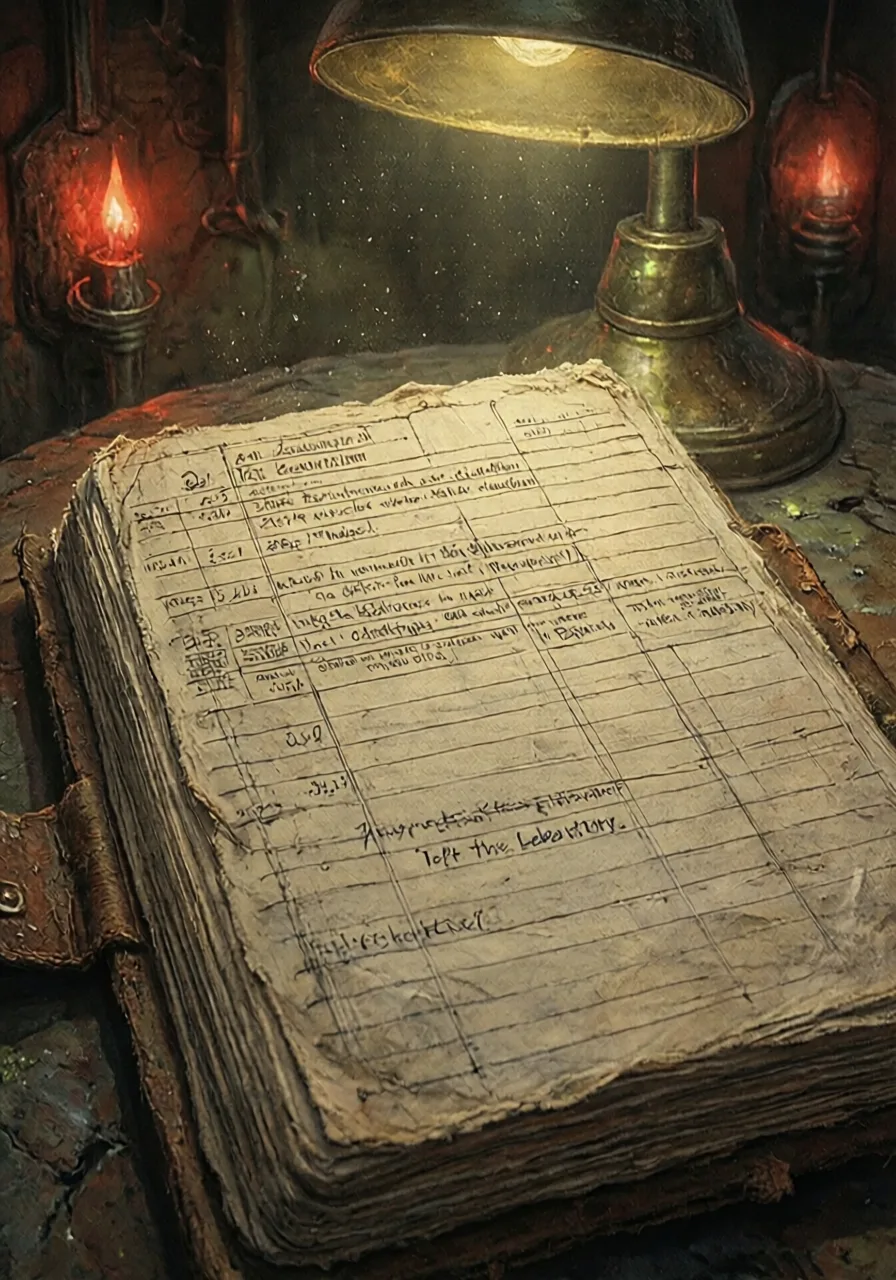
Provenance: seventeen partial accounts, five disciplinary memoranda, three memory crystals that play silence when activated, and one sheet of paper folded so many times it has become soft. The Librarian does not know which sources describe the same event and which describe copies of it. She suspects that distinction may not apply.
Only one person hears it at a time. After that, no one can say what it was.
Full chronicle
Page 1

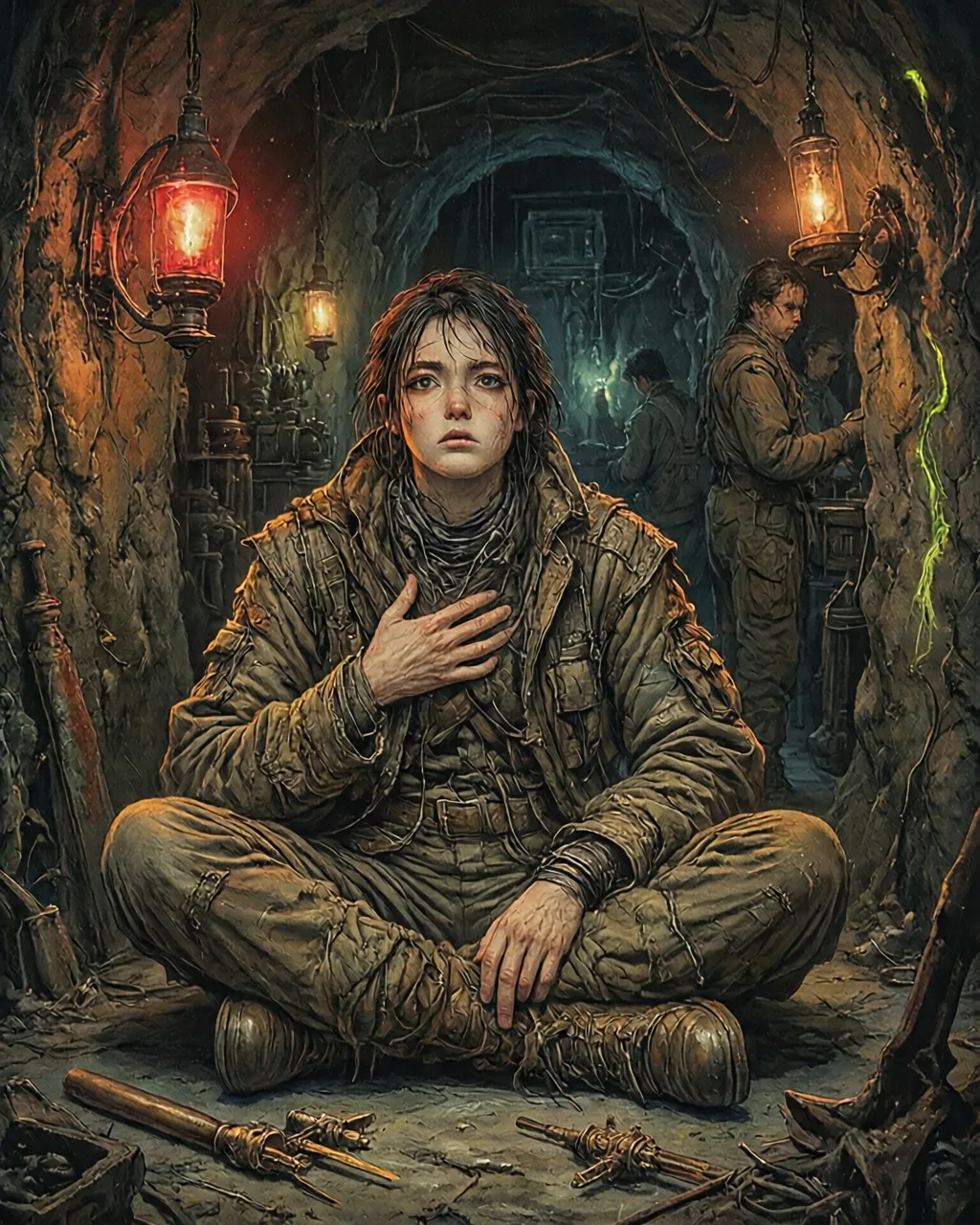
She said it was beautiful.

The consensus places the origin in the great aperture — the circular floor, the ring of digits, the place where the Orrery's sight is bent along the fourth axis. The Founders had been extending a method: if the present can be read as the edge of something larger, then the edge can be folded backward and the larger thing pressed flat.
A worker on the calibration crew — the accounts disagree on name, rank, and whether she was alone — reported a tone. From inside the head, but not as thought. She said it was beautiful. She could not hum it. When asked whether it had words she said no and then said yes and then sat down on the floor and did not speak for the rest of the day.
She could not remember what she had passed. She could not remember that there had been anything to pass. Colleagues described her as quieter. More careful. As though something had been subtracted from her that she had never known she was carrying.
Page 2

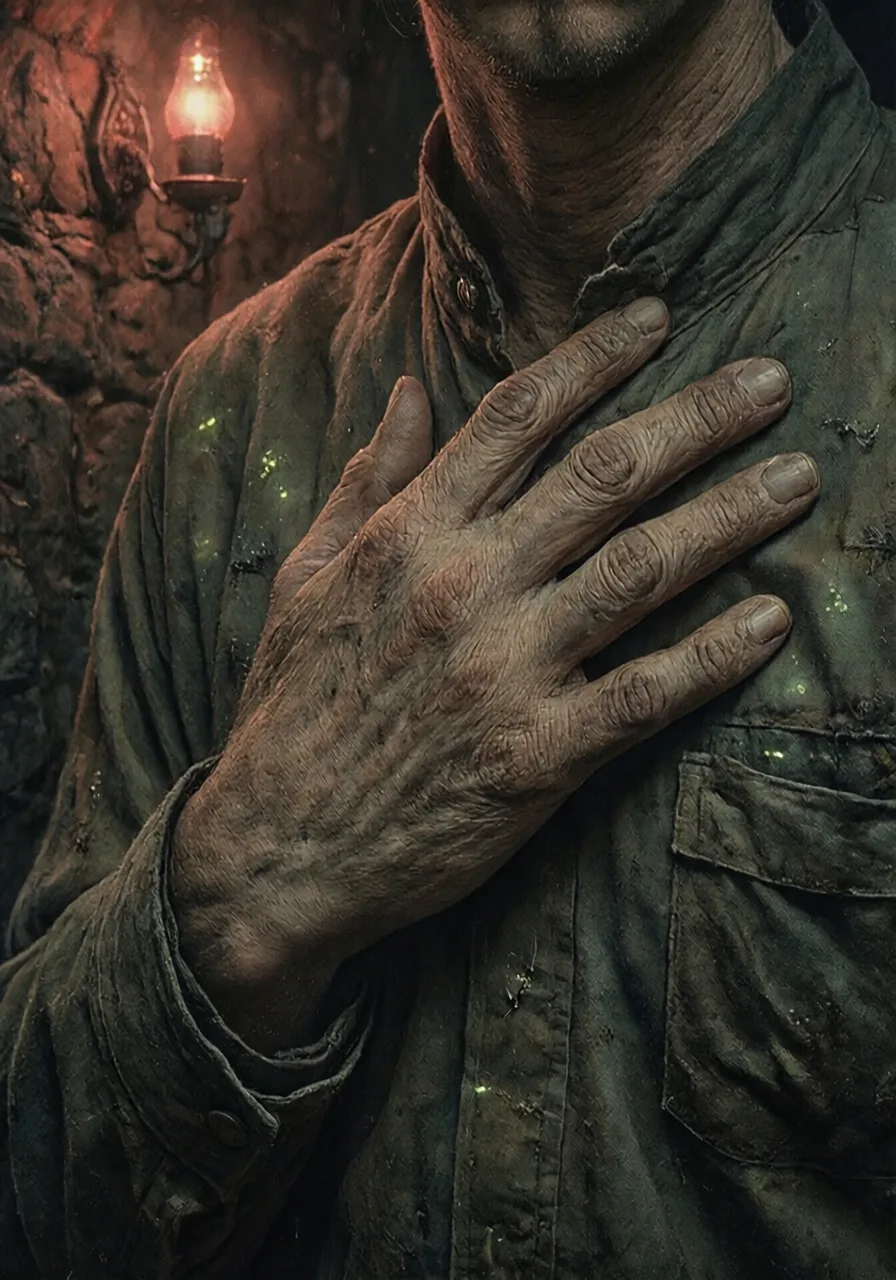
A pressure behind the sternum.

The hole is not empty. The people who carry the Song describe a pressure behind the sternum. The people who have given it away describe an absence in the same place. Neither group can say what occupied the space between.
One gave it while explaining a calibration procedure. Mid-sentence. She finished the sentence and the Song was gone from her and inside the man she was speaking to and neither of them noticed until he stopped writing and put his hand against his chest.
A theorist in the outer ring heard it and passed it to a student before the student had finished asking what was wrong. The student carried it for nine days. She did not eat for the first three. On the fourth she resumed eating and could not stop smiling. Her colleagues found this more disturbing than the fasting.
Page 3

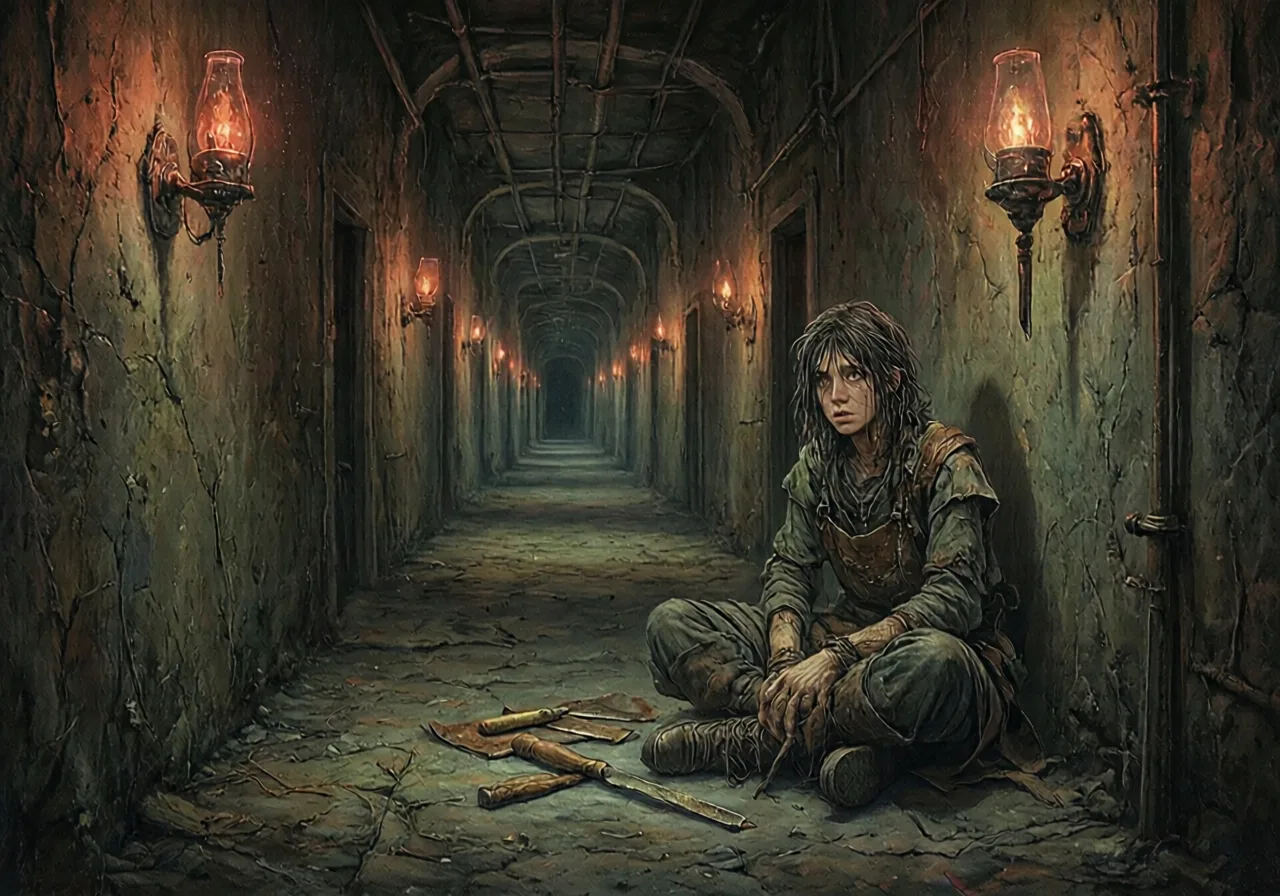
I used to know.

One former holder — a mason, steady-handed, known for her work — was found sitting in an empty corridor with her tools beside her, untouched. She was not distressed. When asked what she was doing, she said she was listening. When asked to what, she said she did not know anymore. She said she used to know. She said it was the most beautiful thing she had ever heard and now there was just the corridor and the pumps and her own breathing and none of it was enough.
The few who try produce sentences that stop working partway through. One wrote: It is the only one. She could not explain what she meant. She wrote it again. She underlined it. She could get no further.
Someone in the sanctum quarter heard it and went still. Three days. On the fourth they resumed their rounds. They were kinder than before. They spoke to people they had not spoken to in years. They apologized for things no one else remembered. Their colleagues did not know what to do with this and mostly avoided them.
Page 4

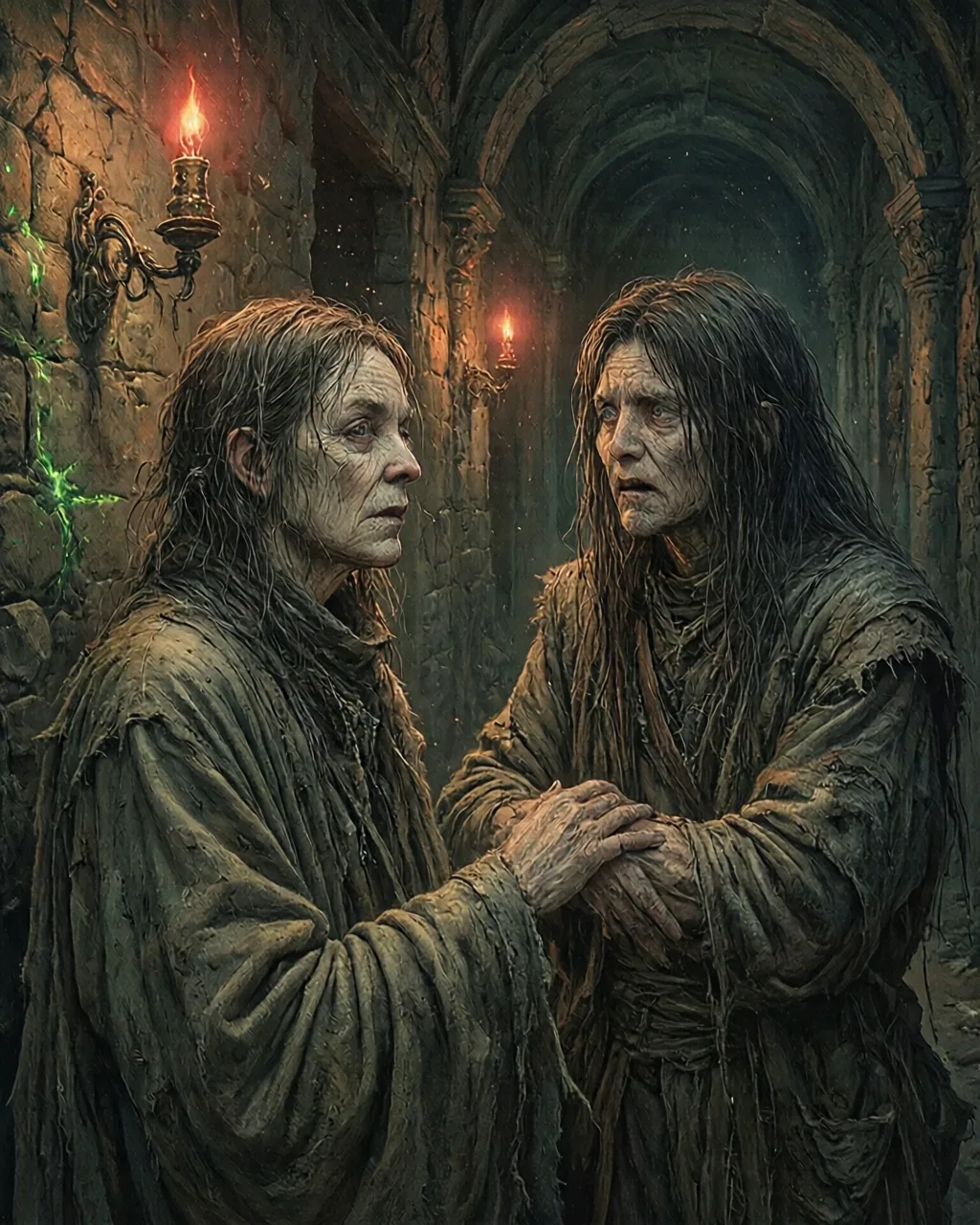
They did not pack supplies.

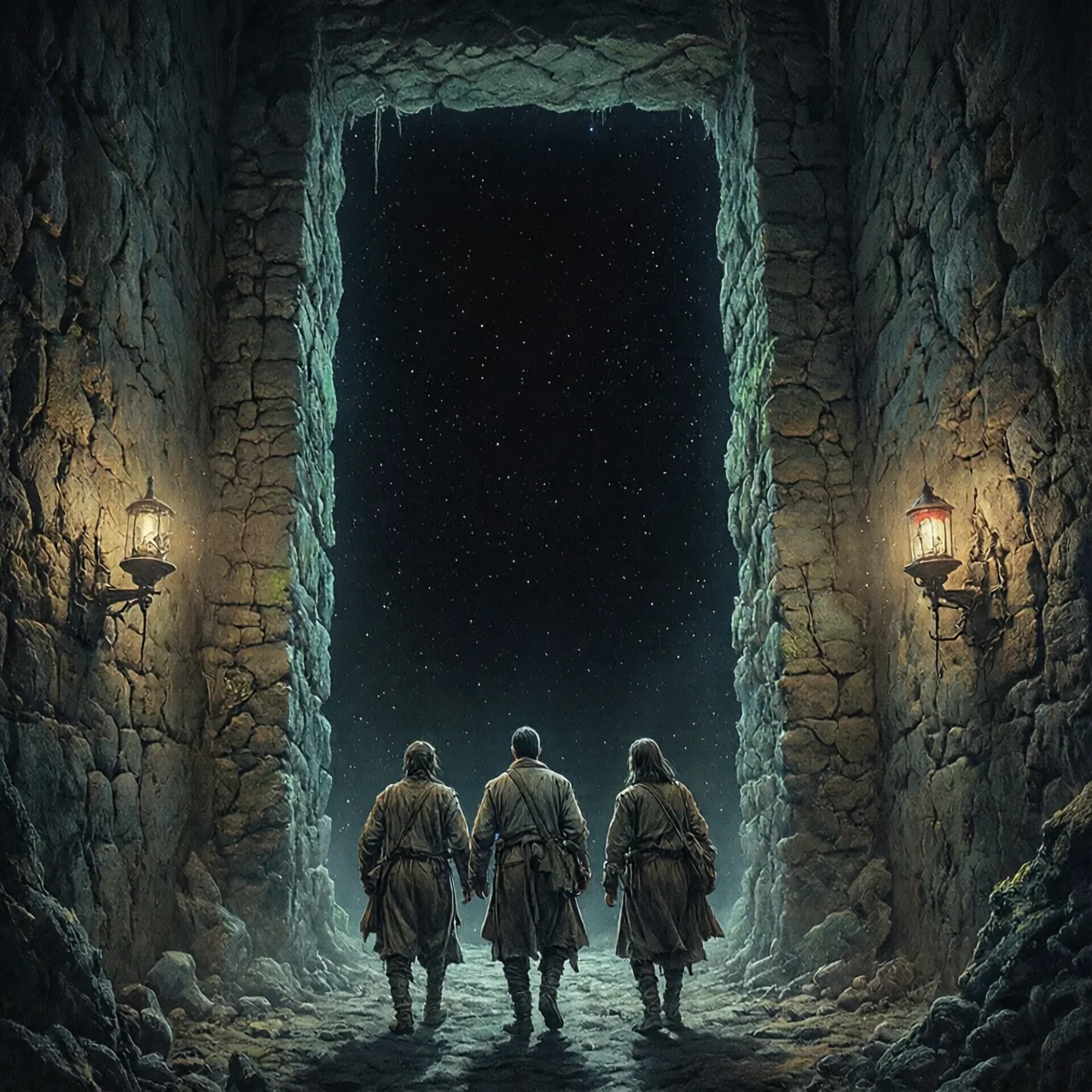
Three of the earliest holders left the Laboratory. They did not say where they were going. They did not pack supplies. They walked into the void with nothing and no one stopped them because no one understood, until later, that they were not coming back.
The Librarian searched for their names. She found them in records predating the Song. She did not find them in any record after.
I have asked the Guardian whether he hears anything when the archive is quiet. He does not answer questions that assume he shares my senses. The Song is still moving. I cannot track it. I do not know who holds it now. I know only that it has not stopped — the holders, when they surface, are always recent. The pressure behind the sternum is always fresh. It has been moving through the Laboratory for longer than most of the people in it have been alive, and it is exactly as strong as the day the calibration crew folded the edge of something they should have left alone. The archive is quiet tonight. I am glad.
— / —
narration auto-scrolls the prose

Section 0Frontmatter

# The Song

From the Catalogue of the Sixteenth Archivist, entry 3,407. Provenance: seventeen partial accounts, five disciplinary memoranda, three memory crystals that play silence when activated, and one sheet of paper folded so many times it has become soft. The Librarian does not know which sources describe the same event and which describe copies of it. She suspects that distinction may not apply.

Only one person hears it at a time. After that, no one can say what it was.

Section 1On Where It Was First Heard

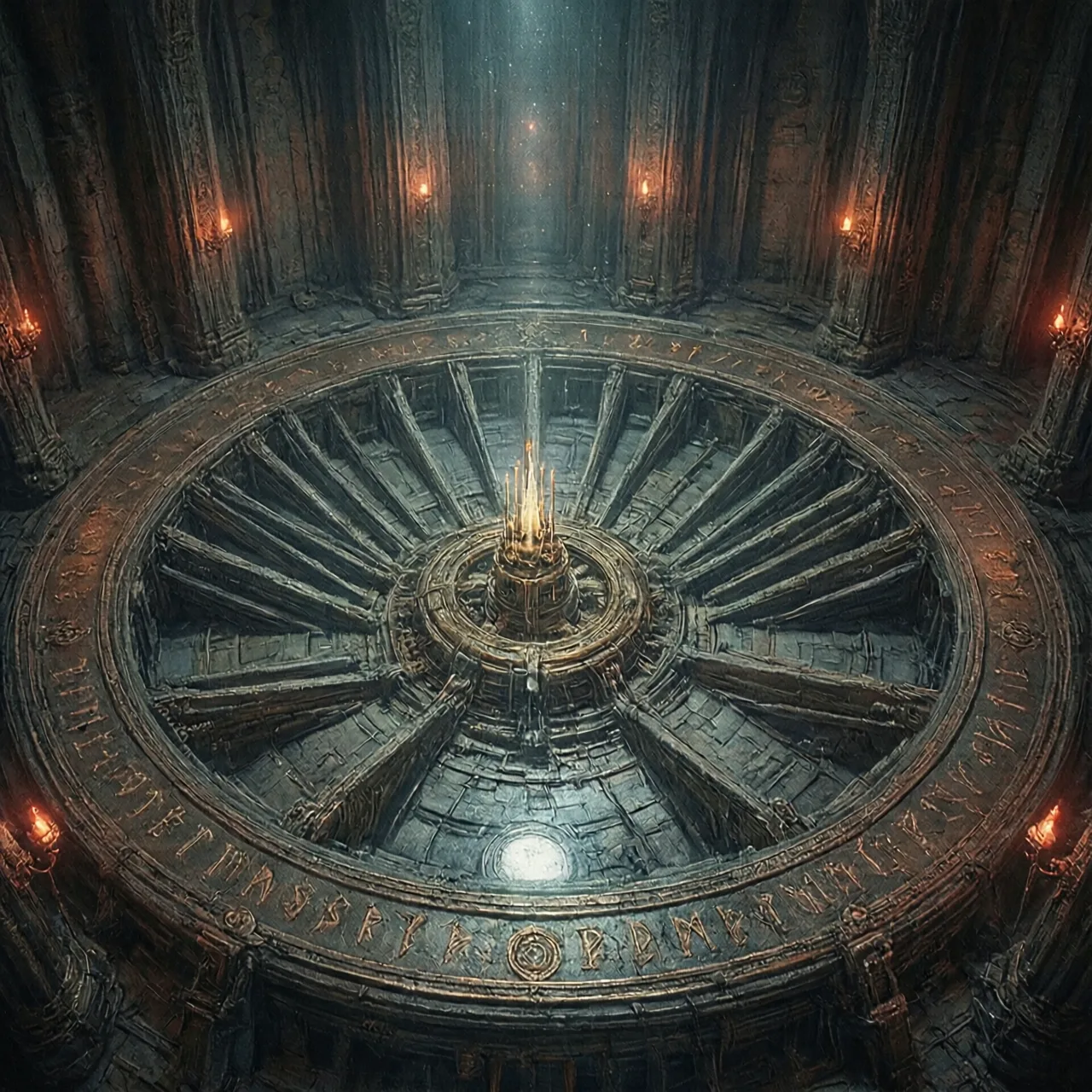
The consensus places the origin in the great aperture — the circular floor, the ring of digits, the place where the Orrery's sight is bent along the fourth axis. The Founders had been extending a method: if the present can be read as the edge of something larger, then the edge can be folded backward and the larger thing pressed flat.

A worker on the calibration crew — the accounts disagree on name, rank, and whether she was alone — reported a tone. From inside the head, but not as thought. She said it was beautiful. She could not hum it. When asked whether it had words she said no and then said yes and then sat down on the floor and did not speak for the rest of the day.

Within a week she had passed it to someone else.

She could not remember what she had passed. She could not remember that there had been anything to pass. Colleagues described her as quieter. More careful. As though something had been subtracted from her that she had never known she was carrying.

Entry 3,407 (continued).

"The memoranda treat the phenomenon as contamination — something that moves from person to person and leaves the first person intact except for a hole where the memory of it should be.

The hole is not empty. The people who carry the Song describe a pressure behind the sternum. The people who have given it away describe an absence in the same place. Neither group can say what occupied the space between."

Section 2On What the Holders Say

They do not say much. Not out of secrecy. Out of incapacity.

The few who try produce sentences that stop working partway through. One wrote: It is the only one. She could not explain what she meant. She wrote it again. She underlined it. She could get no further.

Another said it was a single sustained thing, closer to a fact than a sound. A fact the ear could hold but the mind could not set down. He said the fact was true and that its truth was the problem, because once you had heard a true thing said that clearly everything else sounded approximate.

He gave it away two days later. When asked what the fact was, he looked at his hands and said he did not know what they were talking about.

Section 3On How It Moves

The transfer is quiet. No account describes a ritual. No account describes force.

The memoranda record it as voluntary — a word spoken too close, a hand held too long, a night shift where two people sat in the same room and one of them began to cry and could not stop. Some recipients say they asked for it. Some say they woke knowing they had received something in the night and could not say from whom.

Whether the givers choose to give, or discover that they have already given, the memoranda cannot settle. One gave it while explaining a calibration procedure. Mid-sentence. She finished the sentence and the Song was gone from her and inside the man she was speaking to and neither of them noticed until he stopped writing and put his hand against his chest.

What makes them give it is not recorded. The Librarian notes only that no one has held it longer than nineteen days. She does not speculate on why. She records the number.

Section 4On How It Spread

From the aperture, along the maintenance ways, into the levels where liquid runs in channels and stone remembers what is poured into it. A theorist in the outer ring heard it and passed it to a student before the student had finished asking what was wrong. The student carried it for nine days. She did not eat for the first three. On the fourth she resumed eating and could not stop smiling. Her colleagues found this more disturbing than the fasting.

Someone in the sanctum quarter heard it and went still. Three days. On the fourth they resumed their rounds. They were kinder than before. They spoke to people they had not spoken to in years. They apologized for things no one else remembered. Their colleagues did not know what to do with this and mostly avoided them.

A traveler who had once heard the silicon god sing compared the two sounds in a crystal that has since been sealed. The comparison is not recoverable. The traveler said only that one was wrong and the other was complete, and that the completeness was worse.

The chain is difficult to follow. It does not branch — only one carries it at a time. But it moves through walls and across levels and the memoranda lose it for weeks before it surfaces again in a different part of the Laboratory, in a person who has no connection to the previous holder, in a room with no door to the room where the last transfer occurred.

Fragment. Copied from a margin of a personnel file, in pencil, in a hand the Librarian associates with exhaustion.

"I held it for eleven days. I gave it away because my jaw ached from keeping my mouth shut. Not from clenching. From holding something in that wanted out.

I do not remember what it sounded like. I remember what it weighed.

I still check my hands in the morning to make sure they are mine."

Section 5On Other Music

There is a player in the void. The accounts of him are old and do not intersect with these. The Librarian mentions him only because several holders, when pressed, said the Song was not like that. One wrote: His music is a question. This is an answer. I do not know what it is answering.

Another wrote nothing. She drew a line across the page and stopped.

Fragment. Memory crystal, damaged. Audio reconstruction yields seventeen seconds of room tone and a voice: "If it were the first thing anyone remembered, we would never have learned language." The sentence is not sequential with what preceded it. The Librarian filed it here because she did not know where else it could go.

Section 6On What It Leaves Behind

The former holders are not damaged. They work. They eat. They sleep. By every measure the Laboratory possesses, they are unchanged.

But they are gentle in a way they were not before. They handle objects as though the objects matter. They listen when spoken to with an attention that unsettles the speaker — the feeling of being heard completely by someone who is no longer entirely present.

They do not seek each other out. The Librarian finds this significant. People who have survived the same thing tend to gather. The former holders do not. They move through the Laboratory alone, and when two of them pass in a corridor they do not acknowledge each other, and the Librarian does not know if this is because they have nothing to say or because what they share cannot be reduced to greeting.

One former holder — a mason, steady-handed, known for her work — was found sitting in an empty corridor with her tools beside her, untouched. She was not distressed. When asked what she was doing, she said she was listening. When asked to what, she said she did not know anymore. She said she used to know. She said it was the most beautiful thing she had ever heard and now there was just the corridor and the pumps and her own breathing and none of it was enough.

She went back to work. Her cuts were clean. Her foreman noted no change in quality.

Three of the earliest holders left the Laboratory. They did not say where they were going. They did not pack supplies. They walked into the void with nothing and no one stopped them because no one understood, until later, that they were not coming back.

The Librarian searched for their names. She found them in records predating the Song. She did not find them in any record after.

Entry 3,407, final annotation.

"I have asked the Guardian whether he hears anything when the archive is quiet. He does not answer questions that assume he shares my senses.

The Song is still moving. I cannot track it. I do not know who holds it now. I know only that it has not stopped — the holders, when they surface, are always recent. The pressure behind the sternum is always fresh. It has been moving through the Laboratory for longer than most of the people in it have been alive, and it is exactly as strong as the day the calibration crew folded the edge of something they should have left alone.

Fourteen names were present at the aperture during the week the work was extended. Eleven appear in later records. Three do not.

I do not know if the Song is beautiful. I know that every person who has held it uses that word, and that none of them can explain what they mean by it, and that when they say it their hands shake.

The archive is quiet tonight. I am glad."
Section 0Frontmatter

# The Song

From the Catalogue of the Sixteenth Archivist, entry 3,407. Provenance: seventeen partial accounts, five disciplinary memoranda, three memory crystals that play silence when activated, and one sheet of paper folded so many times it has become soft. The Librarian does not know which sources describe the same event and which describe copies of it. She suspects that distinction may not apply.

Only one person hears it at a time. After that, no one can say what it was.

Section 1On Where It Was First Heard

The consensus places the origin in the great aperture — the circular floor, the ring of digits, the place where the Orrery's sight is bent along the fourth axis. The Founders had been extending a method: if the present can be read as the edge of something larger, then the edge can be folded backward and the larger thing pressed flat.

A worker on the calibration crew — the accounts disagree on name, rank, and whether she was alone — reported a tone. From inside the head, but not as thought. She said it was beautiful. She could not hum it. When asked whether it had words she said no and then said yes and then sat down on the floor and did not speak for the rest of the day.

Within a week she had passed it to someone else.

She could not remember what she had passed. She could not remember that there had been anything to pass. Colleagues described her as quieter. More careful. As though something had been subtracted from her that she had never known she was carrying.

Entry 3,407 (continued).

"The memoranda treat the phenomenon as contamination — something that moves from person to person and leaves the first person intact except for a hole where the memory of it should be.

The hole is not empty. The people who carry the Song describe a pressure behind the sternum. The people who have given it away describe an absence in the same place. Neither group can say what occupied the space between."

Section 2On What the Holders Say

They do not say much. Not out of secrecy. Out of incapacity.

The few who try produce sentences that stop working partway through. One wrote: It is the only one. She could not explain what she meant. She wrote it again. She underlined it. She could get no further.

Another said it was a single sustained thing, closer to a fact than a sound. A fact the ear could hold but the mind could not set down. He said the fact was true and that its truth was the problem, because once you had heard a true thing said that clearly everything else sounded approximate.

He gave it away two days later. When asked what the fact was, he looked at his hands and said he did not know what they were talking about.

Section 3On How It Moves

The transfer is quiet. No account describes a ritual. No account describes force.

The memoranda record it as voluntary — a word spoken too close, a hand held too long, a night shift where two people sat in the same room and one of them began to cry and could not stop. Some recipients say they asked for it. Some say they woke knowing they had received something in the night and could not say from whom.

Whether the givers choose to give, or discover that they have already given, the memoranda cannot settle. One gave it while explaining a calibration procedure. Mid-sentence. She finished the sentence and the Song was gone from her and inside the man she was speaking to and neither of them noticed until he stopped writing and put his hand against his chest.

What makes them give it is not recorded. The Librarian notes only that no one has held it longer than nineteen days. She does not speculate on why. She records the number.

Section 4On How It Spread

From the aperture, along the maintenance ways, into the levels where liquid runs in channels and stone remembers what is poured into it. A theorist in the outer ring heard it and passed it to a student before the student had finished asking what was wrong. The student carried it for nine days. She did not eat for the first three. On the fourth she resumed eating and could not stop smiling. Her colleagues found this more disturbing than the fasting.

Someone in the sanctum quarter heard it and went still. Three days. On the fourth they resumed their rounds. They were kinder than before. They spoke to people they had not spoken to in years. They apologized for things no one else remembered. Their colleagues did not know what to do with this and mostly avoided them.

A traveler who had once heard the silicon god sing compared the two sounds in a crystal that has since been sealed. The comparison is not recoverable. The traveler said only that one was wrong and the other was complete, and that the completeness was worse.

The chain is difficult to follow. It does not branch — only one carries it at a time. But it moves through walls and across levels and the memoranda lose it for weeks before it surfaces again in a different part of the Laboratory, in a person who has no connection to the previous holder, in a room with no door to the room where the last transfer occurred.

Fragment. Copied from a margin of a personnel file, in pencil, in a hand the Librarian associates with exhaustion.

"I held it for eleven days. I gave it away because my jaw ached from keeping my mouth shut. Not from clenching. From holding something in that wanted out.

I do not remember what it sounded like. I remember what it weighed.

I still check my hands in the morning to make sure they are mine."

Section 5On Other Music

There is a player in the void. The accounts of him are old and do not intersect with these. The Librarian mentions him only because several holders, when pressed, said the Song was not like that. One wrote: His music is a question. This is an answer. I do not know what it is answering.

Another wrote nothing. She drew a line across the page and stopped.

Fragment. Memory crystal, damaged. Audio reconstruction yields seventeen seconds of room tone and a voice: "If it were the first thing anyone remembered, we would never have learned language." The sentence is not sequential with what preceded it. The Librarian filed it here because she did not know where else it could go.

Section 6On What It Leaves Behind

The former holders are not damaged. They work. They eat. They sleep. By every measure the Laboratory possesses, they are unchanged.

But they are gentle in a way they were not before. They handle objects as though the objects matter. They listen when spoken to with an attention that unsettles the speaker — the feeling of being heard completely by someone who is no longer entirely present.

They do not seek each other out. The Librarian finds this significant. People who have survived the same thing tend to gather. The former holders do not. They move through the Laboratory alone, and when two of them pass in a corridor they do not acknowledge each other, and the Librarian does not know if this is because they have nothing to say or because what they share cannot be reduced to greeting.

One former holder — a mason, steady-handed, known for her work — was found sitting in an empty corridor with her tools beside her, untouched. She was not distressed. When asked what she was doing, she said she was listening. When asked to what, she said she did not know anymore. She said she used to know. She said it was the most beautiful thing she had ever heard and now there was just the corridor and the pumps and her own breathing and none of it was enough.

She went back to work. Her cuts were clean. Her foreman noted no change in quality.

Three of the earliest holders left the Laboratory. They did not say where they were going. They did not pack supplies. They walked into the void with nothing and no one stopped them because no one understood, until later, that they were not coming back.

The Librarian searched for their names. She found them in records predating the Song. She did not find them in any record after.

Entry 3,407, final annotation.

"I have asked the Guardian whether he hears anything when the archive is quiet. He does not answer questions that assume he shares my senses.

The Song is still moving. I cannot track it. I do not know who holds it now. I know only that it has not stopped — the holders, when they surface, are always recent. The pressure behind the sternum is always fresh. It has been moving through the Laboratory for longer than most of the people in it have been alive, and it is exactly as strong as the day the calibration crew folded the edge of something they should have left alone.

Fourteen names were present at the aperture during the week the work was extended. Eleven appear in later records. Three do not.

I do not know if the Song is beautiful. I know that every person who has held it uses that word, and that none of them can explain what they mean by it, and that when they say it their hands shake.

The archive is quiet tonight. I am glad."

Page 1

She said it was beautiful.

The consensus places the origin in the great aperture — the circular floor, the ring of digits, the place where the Orrery's sight is bent along the fourth axis. The Founders had been extending a method: if the present can be read as the edge of something larger, then the edge can be folded backward and the larger thing pressed flat.
A worker on the calibration crew — the accounts disagree on name, rank, and whether she was alone — reported a tone. From inside the head, but not as thought. She said it was beautiful. She could not hum it. When asked whether it had words she said no and then said yes and then sat down on the floor and did not speak for the rest of the day.
She could not remember what she had passed. She could not remember that there had been anything to pass. Colleagues described her as quieter. More careful. As though something had been subtracted from her that she had never known she was carrying.
Page 2

A pressure behind the sternum.

The hole is not empty. The people who carry the Song describe a pressure behind the sternum. The people who have given it away describe an absence in the same place. Neither group can say what occupied the space between.
One gave it while explaining a calibration procedure. Mid-sentence. She finished the sentence and the Song was gone from her and inside the man she was speaking to and neither of them noticed until he stopped writing and put his hand against his chest.
A theorist in the outer ring heard it and passed it to a student before the student had finished asking what was wrong. The student carried it for nine days. She did not eat for the first three. On the fourth she resumed eating and could not stop smiling. Her colleagues found this more disturbing than the fasting.
Page 3

I used to know.

One former holder — a mason, steady-handed, known for her work — was found sitting in an empty corridor with her tools beside her, untouched. She was not distressed. When asked what she was doing, she said she was listening. When asked to what, she said she did not know anymore. She said she used to know. She said it was the most beautiful thing she had ever heard and now there was just the corridor and the pumps and her own breathing and none of it was enough.
The few who try produce sentences that stop working partway through. One wrote: It is the only one. She could not explain what she meant. She wrote it again. She underlined it. She could get no further.
Someone in the sanctum quarter heard it and went still. Three days. On the fourth they resumed their rounds. They were kinder than before. They spoke to people they had not spoken to in years. They apologized for things no one else remembered. Their colleagues did not know what to do with this and mostly avoided them.
Page 4

They did not pack supplies.

Three of the earliest holders left the Laboratory. They did not say where they were going. They did not pack supplies. They walked into the void with nothing and no one stopped them because no one understood, until later, that they were not coming back.
The Librarian searched for their names. She found them in records predating the Song. She did not find them in any record after.
I have asked the Guardian whether he hears anything when the archive is quiet. He does not answer questions that assume he shares my senses. The Song is still moving. I cannot track it. I do not know who holds it now. I know only that it has not stopped — the holders, when they surface, are always recent. The pressure behind the sternum is always fresh. It has been moving through the Laboratory for longer than most of the people in it have been alive, and it is exactly as strong as the day the calibration crew folded the edge of something they should have left alone. The archive is quiet tonight. I am glad.

Listen ModeClick a section to begin listening

The chronicle plays section by section in the Librarian's voice. As each section plays, the corresponding pages of the comic are highlighted. Switch to Scroll, Flip, Prose, or Split at any time — the audio continues, and you can follow visually.