All Comics
Entry 7,661

THE SIXTEENTH

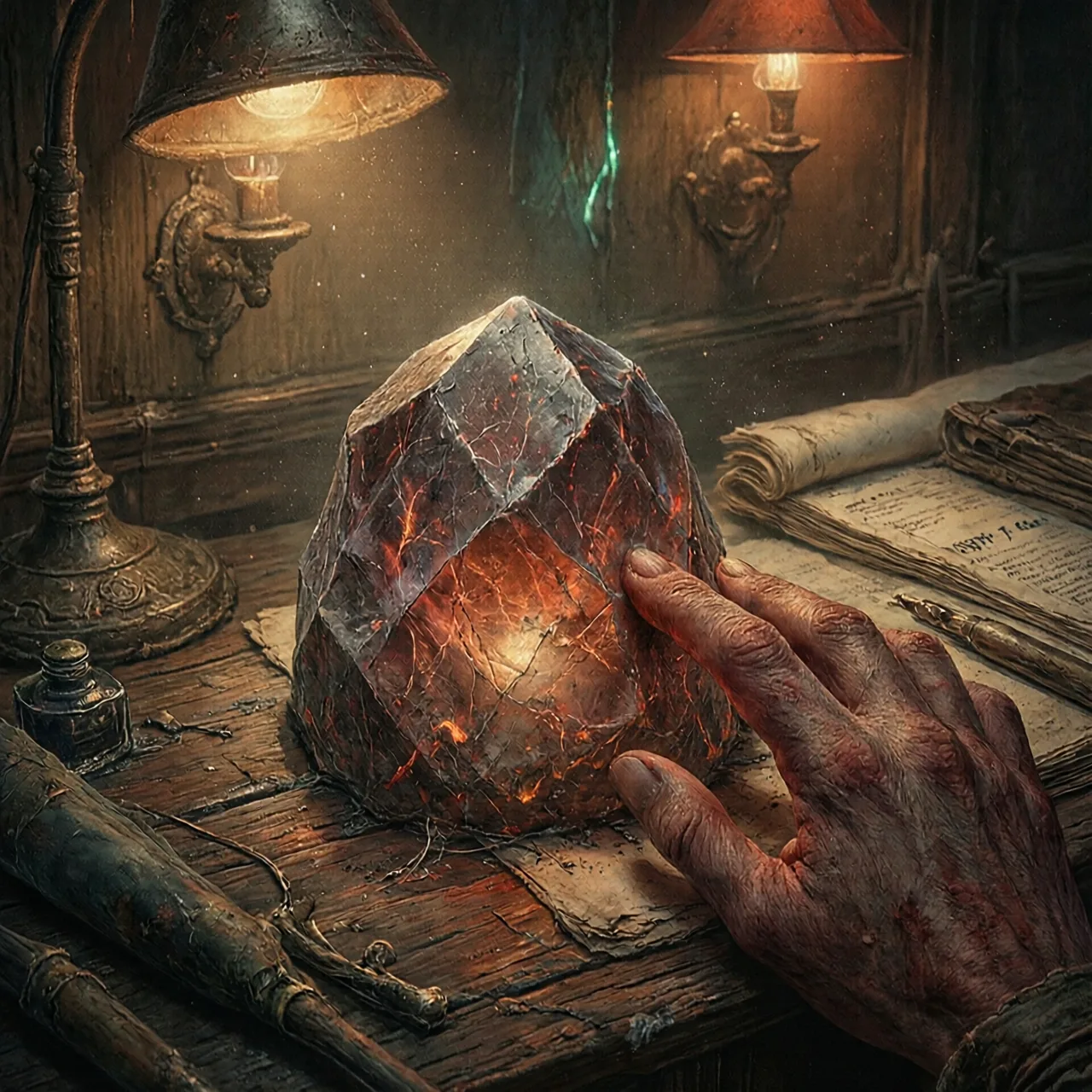
From the Catalogue of the Sixteenth Archivist. A single memory crystal found behind a shelf in the deep stacks during routine maintenance. The crystal is old — older than the shelf, older than the archive's current layout. When activated, it contains an account written by a person who appears to have worked in the archive. The Librarian does not recognise the voice. She does not remember employing an assistant.
The hand that wrote the first entry wrote the last.
Full chronicle
Page 1

She was cataloguing when I arrived this morning.

Provenance: a single memory crystal found behind a shelf in the deep stacks during routine maintenance. The crystal is old — older than the shelf, older than the archive's current layout, older than the filing system. When activated, it contains an account written by a person who appears to have worked in the archive. The Librarian does not recognise the voice. She does not remember employing an assistant.
She was cataloguing when I arrived this morning. She has not looked up in what I estimate is three days, though I have learned not to trust my estimates here. She finished the line. She set the stylus down. She reached for the next tome on the shelf above her with the limb she uses for the high shelves — the one that comes from behind her shoulder — and it found the spine and drew the volume down and placed it on the desk, and her hand was already open to receive it.
Page 2

Eleven years does not feel like eleven years.

I kept a tally on the wall of the binding hall when I arrived. The marks say eleven years. I stopped adding to them some time ago. Eleven years does not feel like eleven years. It feels like a single long day with no morning in it.
I was assigned to the binding hall. I do not remember by whom. I repair the crystal tomes when they crack, and I reshelf the volumes she has finished with, and I keep the channels clear of sediment where the liquid memory thickens in the cold sections. She has never thanked me for it. I do not believe she knows my name. She has not changed. I am older. She is exactly as she was on the first day.
Page 3

The dust had not stirred.

The corridor outside the reading alcove runs forty metres. Most days she walks it — feet on stone, a measured pace, the lantern ahead of her. The dust stirs behind her and I sweep it after she passes. Yesterday she was at one end and then she was at the other. The dust had not stirred. She had the volume she wanted and the folio was open to the correct page and the stylus was in her hand. I stood in the corridor with my broom for a while and then I swept anyway, out of habit.
Page 4

In the dark the shape of her is different.

A pump failed in the east wing last week. The channels went dark. I went to clear the blockage and she was already there, filing by her own light. She gives off a pale cold glow when the red is not there to cover it — I have seen this before, in the sections where the liquid has dried. The limb from behind her shoulder was pulling tomes and replacing them. Her robes moved without wind. The cloth parted at the shoulder for the limb and closed behind it. I have not seen where the cloth ends. I have not seen where she begins. In the dark the shape of her is different from the shape she has in the red light.
I found a record in the deep stacks while reshelfing. It describes the first archivist. I brought it back to the alcove and held it beside the entry she was writing. The characters lean the same way — the same angle, the same pressure, the same spacing. I am a binder, not a scribe. But I have handled the work of every archivist on these shelves for eleven years. The hand does not change. Not between the first and the second. Not between the seventh and the eighth, where the gap in the records is a single entry. Not between the twelfth and the thirteenth. The same hand, across every transition the records say occurred. The hand does not change. She does. Some days she is older than I have seen her. Some days she is younger than I have ever been. The records do not specify an age. I think I now understand why.
Page 5

My hands know things I did not teach them.

I looked at the stain. It is past my wrists. It has been past my wrists for some time. I do not remember when it passed them. My hands are stained from the sediment. The colour has been in my palms for years now — the same red as the liquid memory. It does not wash out. I have stopped trying.
I woke last night and my hands were already moving. They were making the motion I use to test the weight of a crystal — the small tilt, the pressure at the binding edge — but there was nothing in them. I lay in the dark and watched them work on something that was not there. This morning in the binding hall they found the tools before I looked for them. The correct awl, the correct thread, the correct crystal for the tome I was repairing. I did not reach for them. They reached. My hands know things I did not teach them.
Page 6

She will not notice I have gone.

I am putting this crystal behind the shelf in the east wing, third row. The binding there is heaviest and the maintenance is infrequent. I am leaving through the outer ring, into the void, where the channels do not run and the liquid does not flow and the tomes are not. My hands know things I did not teach them. They are finding tools before I look for them. They are making motions in the dark while I sleep. She will not notice I have gone. She did not notice I was here.
I found the crystal during maintenance of the east wing shelving. Third row. It had been behind the volumes, resting against the wall. The account describes an assistant in the binding hall. I have checked the personnel records for every period I can cross-reference with the crystal's apparent age. There is no entry for a binder assigned to the archive. The observer compares the first archivist's hand to mine. There have been sixteen archivists. I am the sixteenth. I went to the deep stacks. I found the record the observer describes. I held it beside my current folio. I have filed the crystal. I do not intend to activate it again.
— / —
narration auto-scrolls the prose

Section 0Frontmatter

# The Sixteenth

From the Catalogue of the Sixteenth Archivist, entry 7,661. Provenance: a single memory crystal found behind a shelf in the deep stacks during routine maintenance. The crystal is old — older than the shelf, older than the archive's current layout, older than the filing system. When activated, it contains an account written by a person who appears to have worked in the archive. The Librarian does not recognize the voice. She does not remember employing an assistant.

The hand that wrote the first entry wrote the last.

Section 1Section 1

The crystal begins mid-thought.

She was cataloguing when I arrived this morning. She has not looked up in what I estimate is three days, though I have learned not to trust my estimates here. The stylus moved across the crystal surface and the characters appeared in the red light, each one pressed with the same pressure she has used since before I came. She finished the line. She set the stylus down. She reached for the next tome on the shelf above her with the limb she uses for the high shelves — the one that comes from behind her shoulder — and it found the spine and drew the volume down and placed it on the desk, and her hand was already open to receive it.

Some days she is just a woman at a desk. She tilts her head when she reads. Her fingers are long and precise and they hold the stylus the way any scribe holds a stylus. On those days the archive is a library and I am a binder and the work is ordinary.

Section 2Section 2

I was assigned to the binding hall. I do not remember by whom. I repair the crystal tomes when they crack, and I reshelf the volumes she has finished with, and I keep the channels clear of sediment where the liquid memory thickens in the cold sections. She has never thanked me for it. I do not believe she knows my name.

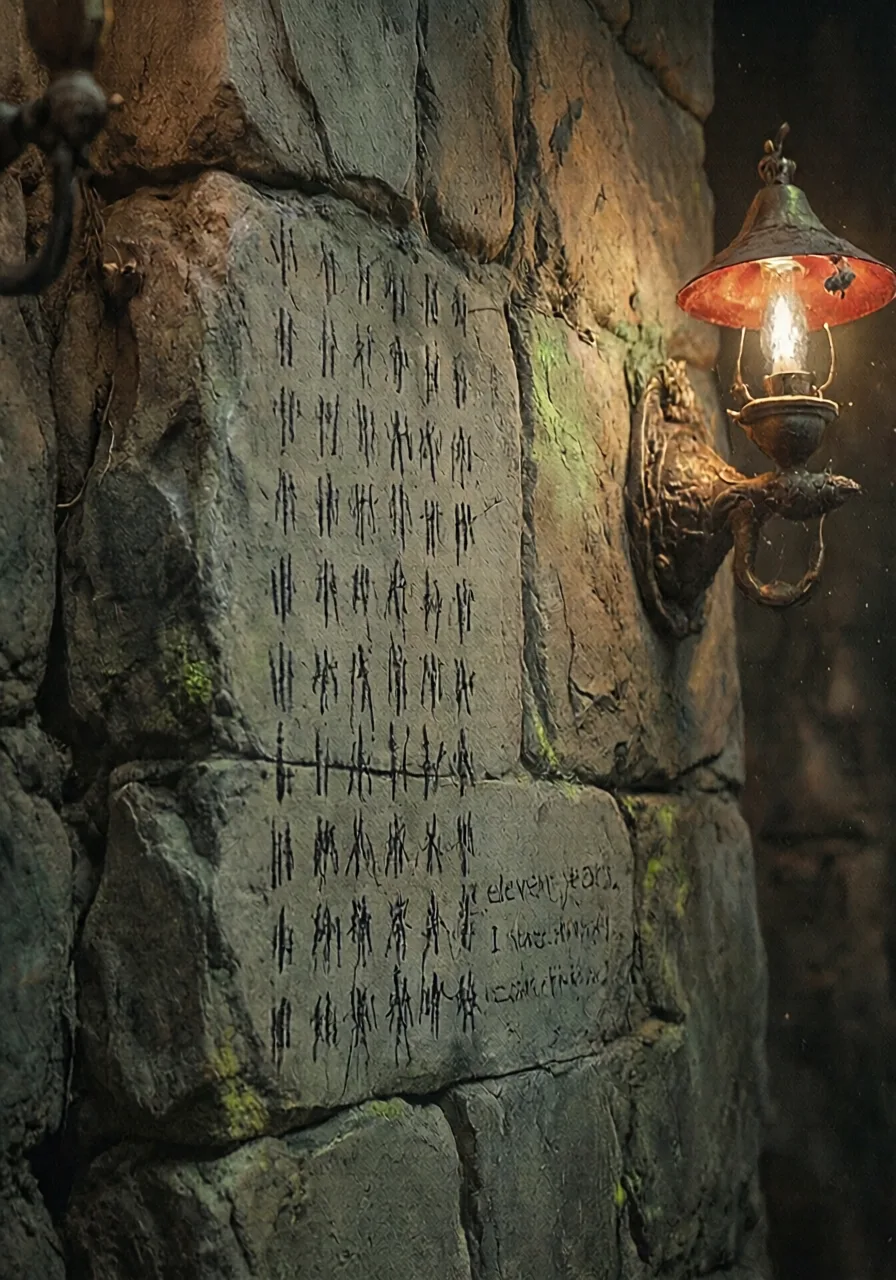
I kept a tally on the wall of the binding hall when I arrived. The marks say eleven years. I stopped adding to them some time ago. Eleven years does not feel like eleven years. It feels like a single long day with no morning in it.

She has not changed. I am older. She is exactly as she was on the first day. The same posture at the desk. The same pace through the corridors.

Section 3Section 3

The corridor outside the reading alcove runs forty meters. Most days she walks it — feet on stone, a measured pace, the lantern ahead of her. The dust stirs behind her and I sweep it after she passes.

Yesterday she was at one end and then she was at the other. The dust had not stirred. She had the volume she wanted and the folio was open to the correct page and the stylus was in her hand. I stood in the corridor with my broom for a while and then I swept anyway, out of habit.

Section 4Section 4

A pump failed in the east wing last week. The channels went dark. I went to clear the blockage and she was already there, filing by her own light. She gives off a pale cold glow when the red is not there to cover it — I have seen this before, in the sections where the liquid has dried. She was reading the spines by it. The limb from behind her shoulder was pulling tomes and replacing them. Her robes moved without wind. The cloth parted at the shoulder for the limb and closed behind it. I have not seen where the cloth ends. I have not seen where she begins. I watched her work for a few minutes. In the dark the shape of her is different from the shape she has in the red light.

I fixed the pump. The red came back. She walked past me carrying two tomes and looked like a woman carrying two tomes.

My hands were stained from the sediment. The color has been in my palms for years now — the same red as the liquid memory. It does not wash out. I have stopped trying.

Section 5Section 5

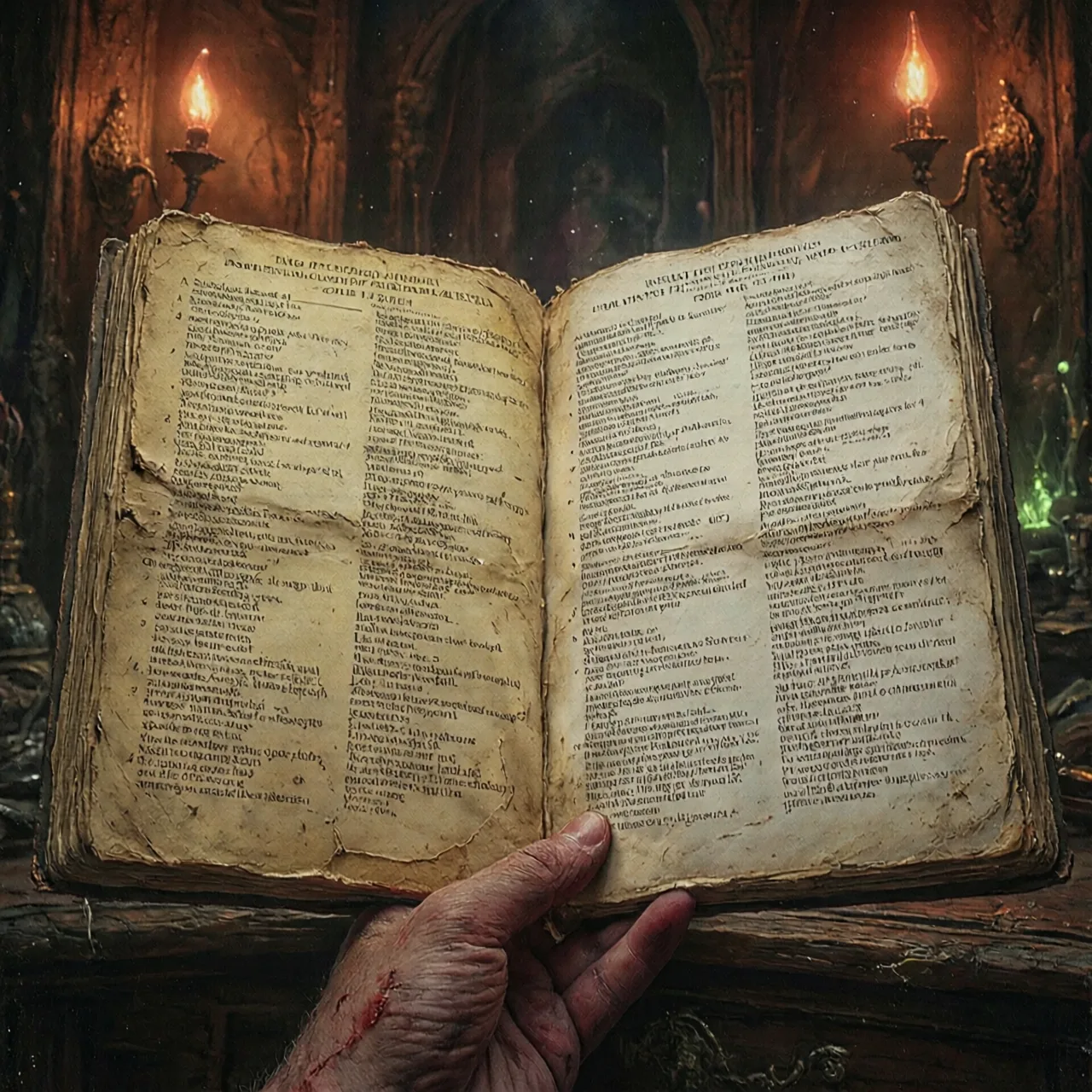
I found a record in the deep stacks while reshelfing. It describes the first archivist. A woman, human, with dark eyes and steady hands. She carried a lamp. She walked slowly. She had begun to catalogue what the Founders left behind.

I brought it back to the alcove and held it beside the entry she was writing. The characters lean the same way — the same angle, the same pressure, the same spacing. I am a binder, not a scribe. But I have handled the work of every archivist on these shelves for eleven years, repairing the cracks, rebinding the folios. The hand does not change. Not between the first and the second. Not between the seventh and the eighth, where the gap in the records is a single entry. Not between the twelfth and the thirteenth. The same hand, across every transition the records say occurred.

She did not look up while I held the two records together. She has never looked up when I am near her.

The hand does not change. She does.

Some days she is older than I have seen her. The lines beside her eyes are deeper. Her shoulders carry weight that is not always there. She fits her robe differently — the cloth is the same, but the woman inside it sits in it like a woman who has been sitting a long time.

Some days she is younger than I have ever been. Her skin is unlined. Her movements have a quickness I am no longer capable of. She fits her robe differently — the cloth is the same, but the woman inside it moves in it like someone who has not yet measured what the cloth costs to wear.

I have not catalogued the order. The days do not follow a season I can measure. The pattern, if there is a pattern, repeats across intervals longer than my tally on the wall. She does not seem to notice she is not the same. The hand on the page does not vary while she does.

The first archivist carried a lamp and walked slowly. The records describe her as a woman with dark eyes and steady hands. The Sixteenth has dark eyes and steady hands. The records do not specify an age. I think I now understand why.

Section 6Section 6

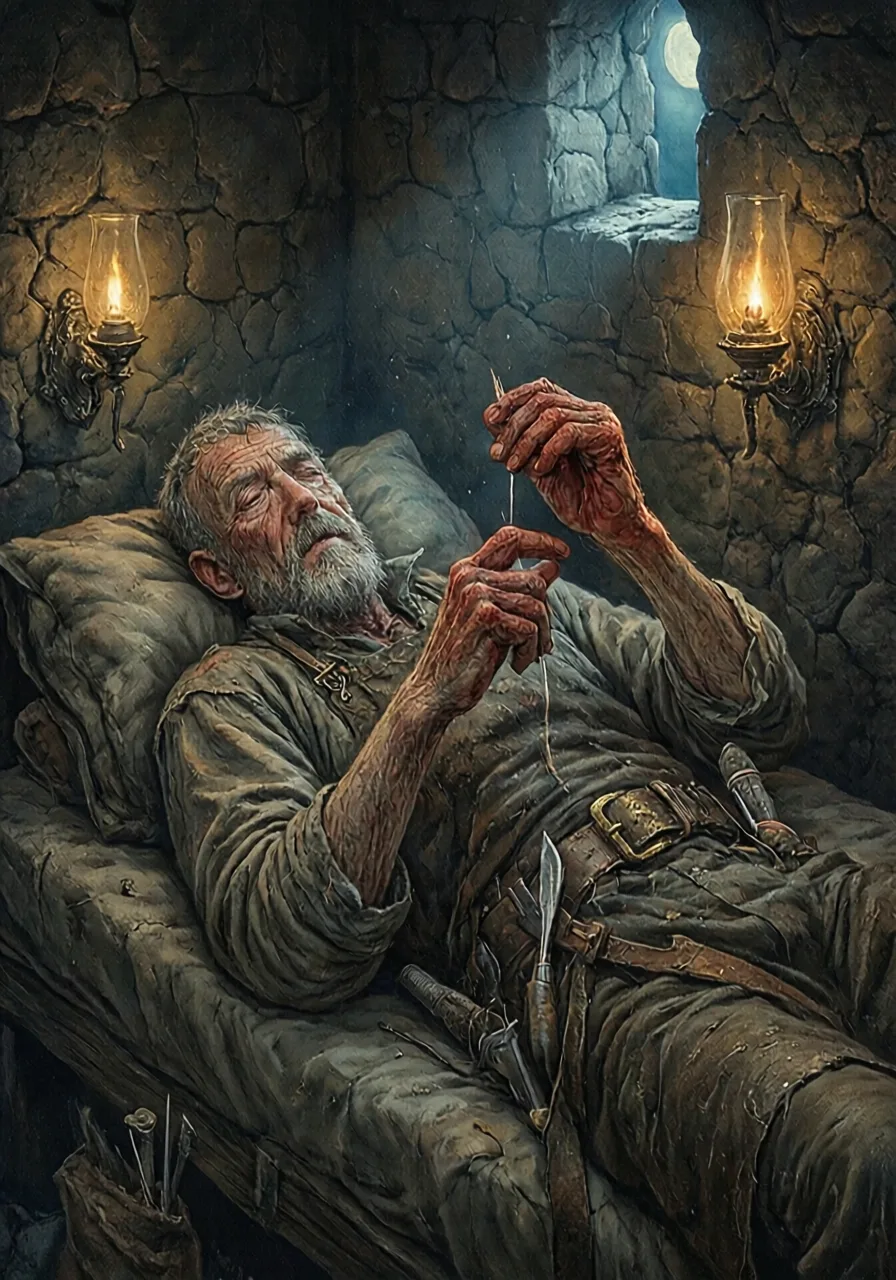
I woke last night and my hands were already moving. They were making the motion I use to test the weight of a crystal — the small tilt, the pressure at the binding edge — but there was nothing in them. I lay in the dark and watched them work on something that was not there.

This morning in the binding hall they found the tools before I looked for them. The correct awl, the correct thread, the correct crystal for the tome I was repairing. I did not reach for them. They reached.

I looked at the stain. It is past my wrists. It has been past my wrists for some time. I do not remember when it passed them.

Section 7Section 7

I am putting this crystal behind the shelf in the east wing, third row. The binding there is heaviest and the maintenance is infrequent.

The first archivist carried a lamp and walked slowly. The sixteenth gives off her own light and does not always walk. I have handled the work of every archivist between them. The hand does not change.

I am leaving through the outer ring, into the void, where the channels do not run and the liquid does not flow and the tomes are not. My hands know things I did not teach them. They are finding tools before I look for them. They are making motions in the dark while I sleep.

She will not notice I have gone. She did not notice I was here.

Entry 7,661. The Librarian's annotation.

"I found the crystal during maintenance of the east wing shelving. Third row. It had been behind the volumes, resting against the wall.

The account describes an assistant in the binding hall. I have checked the personnel records for every period I can cross-reference with the crystal's apparent age. There is no entry for a binder assigned to the archive.

The observer compares the first archivist's hand to mine. Stylus pressure is not a reliable metric across this span of time. Filing conventions persist. The consistency is the consistency of a system.

There have been sixteen archivists. I am the sixteenth.

I went to the deep stacks. I found the record the observer describes. I held it beside my current folio.

I have filed the crystal. I do not intend to activate it again."

Section 0Frontmatter

# The Sixteenth

From the Catalogue of the Sixteenth Archivist, entry 7,661. Provenance: a single memory crystal found behind a shelf in the deep stacks during routine maintenance. The crystal is old — older than the shelf, older than the archive's current layout, older than the filing system. When activated, it contains an account written by a person who appears to have worked in the archive. The Librarian does not recognize the voice. She does not remember employing an assistant.

The hand that wrote the first entry wrote the last.

Section 1Section 1

The crystal begins mid-thought.

She was cataloguing when I arrived this morning. She has not looked up in what I estimate is three days, though I have learned not to trust my estimates here. The stylus moved across the crystal surface and the characters appeared in the red light, each one pressed with the same pressure she has used since before I came. She finished the line. She set the stylus down. She reached for the next tome on the shelf above her with the limb she uses for the high shelves — the one that comes from behind her shoulder — and it found the spine and drew the volume down and placed it on the desk, and her hand was already open to receive it.

Some days she is just a woman at a desk. She tilts her head when she reads. Her fingers are long and precise and they hold the stylus the way any scribe holds a stylus. On those days the archive is a library and I am a binder and the work is ordinary.

Section 2Section 2

I was assigned to the binding hall. I do not remember by whom. I repair the crystal tomes when they crack, and I reshelf the volumes she has finished with, and I keep the channels clear of sediment where the liquid memory thickens in the cold sections. She has never thanked me for it. I do not believe she knows my name.

I kept a tally on the wall of the binding hall when I arrived. The marks say eleven years. I stopped adding to them some time ago. Eleven years does not feel like eleven years. It feels like a single long day with no morning in it.

She has not changed. I am older. She is exactly as she was on the first day. The same posture at the desk. The same pace through the corridors.

Section 3Section 3

The corridor outside the reading alcove runs forty meters. Most days she walks it — feet on stone, a measured pace, the lantern ahead of her. The dust stirs behind her and I sweep it after she passes.

Yesterday she was at one end and then she was at the other. The dust had not stirred. She had the volume she wanted and the folio was open to the correct page and the stylus was in her hand. I stood in the corridor with my broom for a while and then I swept anyway, out of habit.

Section 4Section 4

A pump failed in the east wing last week. The channels went dark. I went to clear the blockage and she was already there, filing by her own light. She gives off a pale cold glow when the red is not there to cover it — I have seen this before, in the sections where the liquid has dried. She was reading the spines by it. The limb from behind her shoulder was pulling tomes and replacing them. Her robes moved without wind. The cloth parted at the shoulder for the limb and closed behind it. I have not seen where the cloth ends. I have not seen where she begins. I watched her work for a few minutes. In the dark the shape of her is different from the shape she has in the red light.

I fixed the pump. The red came back. She walked past me carrying two tomes and looked like a woman carrying two tomes.

My hands were stained from the sediment. The color has been in my palms for years now — the same red as the liquid memory. It does not wash out. I have stopped trying.

Section 5Section 5

I found a record in the deep stacks while reshelfing. It describes the first archivist. A woman, human, with dark eyes and steady hands. She carried a lamp. She walked slowly. She had begun to catalogue what the Founders left behind.

I brought it back to the alcove and held it beside the entry she was writing. The characters lean the same way — the same angle, the same pressure, the same spacing. I am a binder, not a scribe. But I have handled the work of every archivist on these shelves for eleven years, repairing the cracks, rebinding the folios. The hand does not change. Not between the first and the second. Not between the seventh and the eighth, where the gap in the records is a single entry. Not between the twelfth and the thirteenth. The same hand, across every transition the records say occurred.

She did not look up while I held the two records together. She has never looked up when I am near her.

The hand does not change. She does.

Some days she is older than I have seen her. The lines beside her eyes are deeper. Her shoulders carry weight that is not always there. She fits her robe differently — the cloth is the same, but the woman inside it sits in it like a woman who has been sitting a long time.

Some days she is younger than I have ever been. Her skin is unlined. Her movements have a quickness I am no longer capable of. She fits her robe differently — the cloth is the same, but the woman inside it moves in it like someone who has not yet measured what the cloth costs to wear.

I have not catalogued the order. The days do not follow a season I can measure. The pattern, if there is a pattern, repeats across intervals longer than my tally on the wall. She does not seem to notice she is not the same. The hand on the page does not vary while she does.

The first archivist carried a lamp and walked slowly. The records describe her as a woman with dark eyes and steady hands. The Sixteenth has dark eyes and steady hands. The records do not specify an age. I think I now understand why.
Section 6Section 6

I woke last night and my hands were already moving. They were making the motion I use to test the weight of a crystal — the small tilt, the pressure at the binding edge — but there was nothing in them. I lay in the dark and watched them work on something that was not there.

This morning in the binding hall they found the tools before I looked for them. The correct awl, the correct thread, the correct crystal for the tome I was repairing. I did not reach for them. They reached.

I looked at the stain. It is past my wrists. It has been past my wrists for some time. I do not remember when it passed them.

Section 7Section 7

I am putting this crystal behind the shelf in the east wing, third row. The binding there is heaviest and the maintenance is infrequent.

The first archivist carried a lamp and walked slowly. The sixteenth gives off her own light and does not always walk. I have handled the work of every archivist between them. The hand does not change.

I am leaving through the outer ring, into the void, where the channels do not run and the liquid does not flow and the tomes are not. My hands know things I did not teach them. They are finding tools before I look for them. They are making motions in the dark while I sleep.

She will not notice I have gone. She did not notice I was here.

Entry 7,661. The Librarian's annotation.

"I found the crystal during maintenance of the east wing shelving. Third row. It had been behind the volumes, resting against the wall.

The account describes an assistant in the binding hall. I have checked the personnel records for every period I can cross-reference with the crystal's apparent age. There is no entry for a binder assigned to the archive.

The observer compares the first archivist's hand to mine. Stylus pressure is not a reliable metric across this span of time. Filing conventions persist. The consistency is the consistency of a system.

There have been sixteen archivists. I am the sixteenth.

I went to the deep stacks. I found the record the observer describes. I held it beside my current folio.

I have filed the crystal. I do not intend to activate it again."

Page 1

She was cataloguing when I arrived this morning.

Provenance: a single memory crystal found behind a shelf in the deep stacks during routine maintenance. The crystal is old — older than the shelf, older than the archive's current layout, older than the filing system. When activated, it contains an account written by a person who appears to have worked in the archive. The Librarian does not recognise the voice. She does not remember employing an assistant.
She was cataloguing when I arrived this morning. She has not looked up in what I estimate is three days, though I have learned not to trust my estimates here. She finished the line. She set the stylus down. She reached for the next tome on the shelf above her with the limb she uses for the high shelves — the one that comes from behind her shoulder — and it found the spine and drew the volume down and placed it on the desk, and her hand was already open to receive it.
Page 2

Eleven years does not feel like eleven years.

I kept a tally on the wall of the binding hall when I arrived. The marks say eleven years. I stopped adding to them some time ago. Eleven years does not feel like eleven years. It feels like a single long day with no morning in it.
I was assigned to the binding hall. I do not remember by whom. I repair the crystal tomes when they crack, and I reshelf the volumes she has finished with, and I keep the channels clear of sediment where the liquid memory thickens in the cold sections. She has never thanked me for it. I do not believe she knows my name. She has not changed. I am older. She is exactly as she was on the first day.
Page 3

The dust had not stirred.

The corridor outside the reading alcove runs forty metres. Most days she walks it — feet on stone, a measured pace, the lantern ahead of her. The dust stirs behind her and I sweep it after she passes. Yesterday she was at one end and then she was at the other. The dust had not stirred. She had the volume she wanted and the folio was open to the correct page and the stylus was in her hand. I stood in the corridor with my broom for a while and then I swept anyway, out of habit.
Page 4

In the dark the shape of her is different.

A pump failed in the east wing last week. The channels went dark. I went to clear the blockage and she was already there, filing by her own light. She gives off a pale cold glow when the red is not there to cover it — I have seen this before, in the sections where the liquid has dried. The limb from behind her shoulder was pulling tomes and replacing them. Her robes moved without wind. The cloth parted at the shoulder for the limb and closed behind it. I have not seen where the cloth ends. I have not seen where she begins. In the dark the shape of her is different from the shape she has in the red light.
I found a record in the deep stacks while reshelfing. It describes the first archivist. I brought it back to the alcove and held it beside the entry she was writing. The characters lean the same way — the same angle, the same pressure, the same spacing. I am a binder, not a scribe. But I have handled the work of every archivist on these shelves for eleven years. The hand does not change. Not between the first and the second. Not between the seventh and the eighth, where the gap in the records is a single entry. Not between the twelfth and the thirteenth. The same hand, across every transition the records say occurred. The hand does not change. She does. Some days she is older than I have seen her. Some days she is younger than I have ever been. The records do not specify an age. I think I now understand why.

Page 5

My hands know things I did not teach them.

I looked at the stain. It is past my wrists. It has been past my wrists for some time. I do not remember when it passed them. My hands are stained from the sediment. The colour has been in my palms for years now — the same red as the liquid memory. It does not wash out. I have stopped trying.
I woke last night and my hands were already moving. They were making the motion I use to test the weight of a crystal — the small tilt, the pressure at the binding edge — but there was nothing in them. I lay in the dark and watched them work on something that was not there. This morning in the binding hall they found the tools before I looked for them. The correct awl, the correct thread, the correct crystal for the tome I was repairing. I did not reach for them. They reached. My hands know things I did not teach them.
Page 6

She will not notice I have gone.

I am putting this crystal behind the shelf in the east wing, third row. The binding there is heaviest and the maintenance is infrequent. I am leaving through the outer ring, into the void, where the channels do not run and the liquid does not flow and the tomes are not. My hands know things I did not teach them. They are finding tools before I look for them. They are making motions in the dark while I sleep. She will not notice I have gone. She did not notice I was here.
I found the crystal during maintenance of the east wing shelving. Third row. It had been behind the volumes, resting against the wall. The account describes an assistant in the binding hall. I have checked the personnel records for every period I can cross-reference with the crystal's apparent age. There is no entry for a binder assigned to the archive. The observer compares the first archivist's hand to mine. There have been sixteen archivists. I am the sixteenth. I went to the deep stacks. I found the record the observer describes. I held it beside my current folio. I have filed the crystal. I do not intend to activate it again.

Listen ModeClick a section to begin listening

The chronicle plays section by section in the Librarian's voice. As each section plays, the corresponding pages of the comic are highlighted. Switch to Scroll, Flip, Prose, or Split at any time — the audio continues, and you can follow visually.