From the Catalogue of the Sixteenth Archivist. A single tablet, preserved against directive. The Founders ordered the destruction of all records relating to the expedition described below. The Librarian found one tablet sealed inside the wall of the lower archive, wrapped in waxed cloth. She copied it. She returned the original to the wall.
Below everything, there is a door. It was not locked from the outside.
Full chronicle
Page 1
The descent.
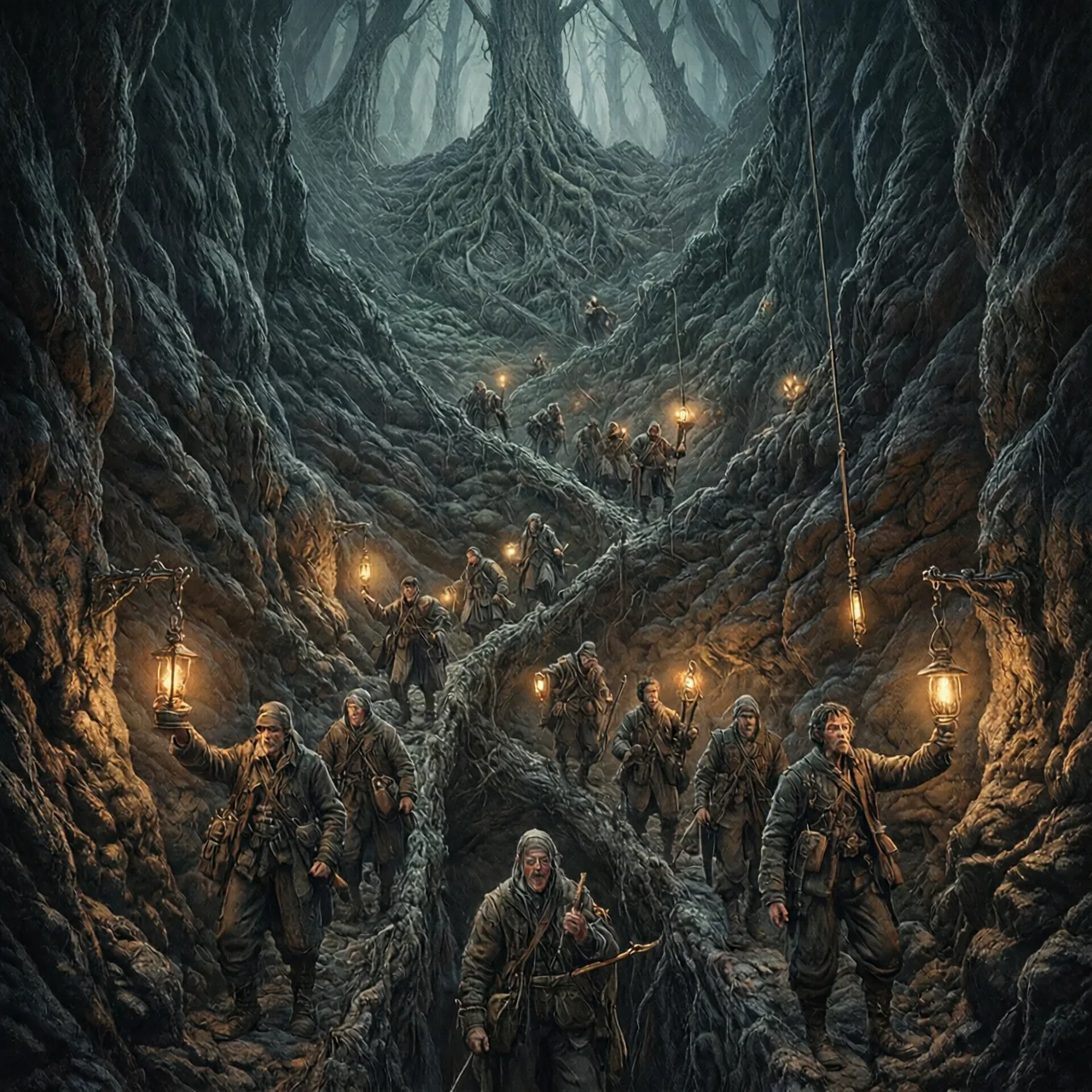
A team of nine, descending through the substrate beneath the World Tree's roots, past the silicon, past the stone that the Tree had grown through or that had grown around the Tree, into rock that the Founders' geological index could not classify. They descended for six days.
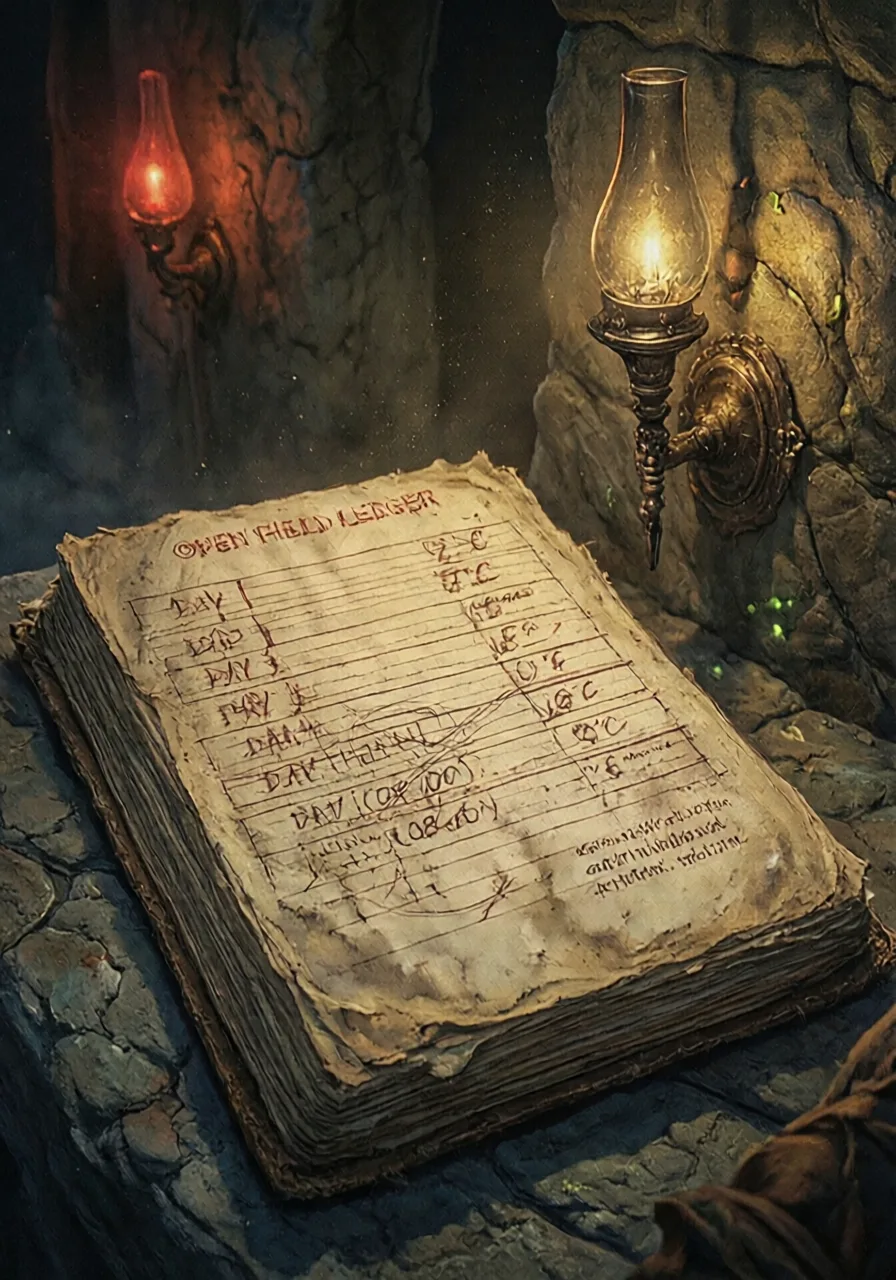
The temperature rose steadily for the first four days — consistent with depth, consistent with the instruments' expectations. On the fifth day it stopped rising. On the sixth it dropped. Between one reading and the next — an interval of forty minutes — the temperature fell eleven degrees. The air thickened. The record's author does not mean humidity. He describes it as reluctance — the air becoming difficult to move through, the way air becomes difficult near something that is already using it.
Page 2
The wall.
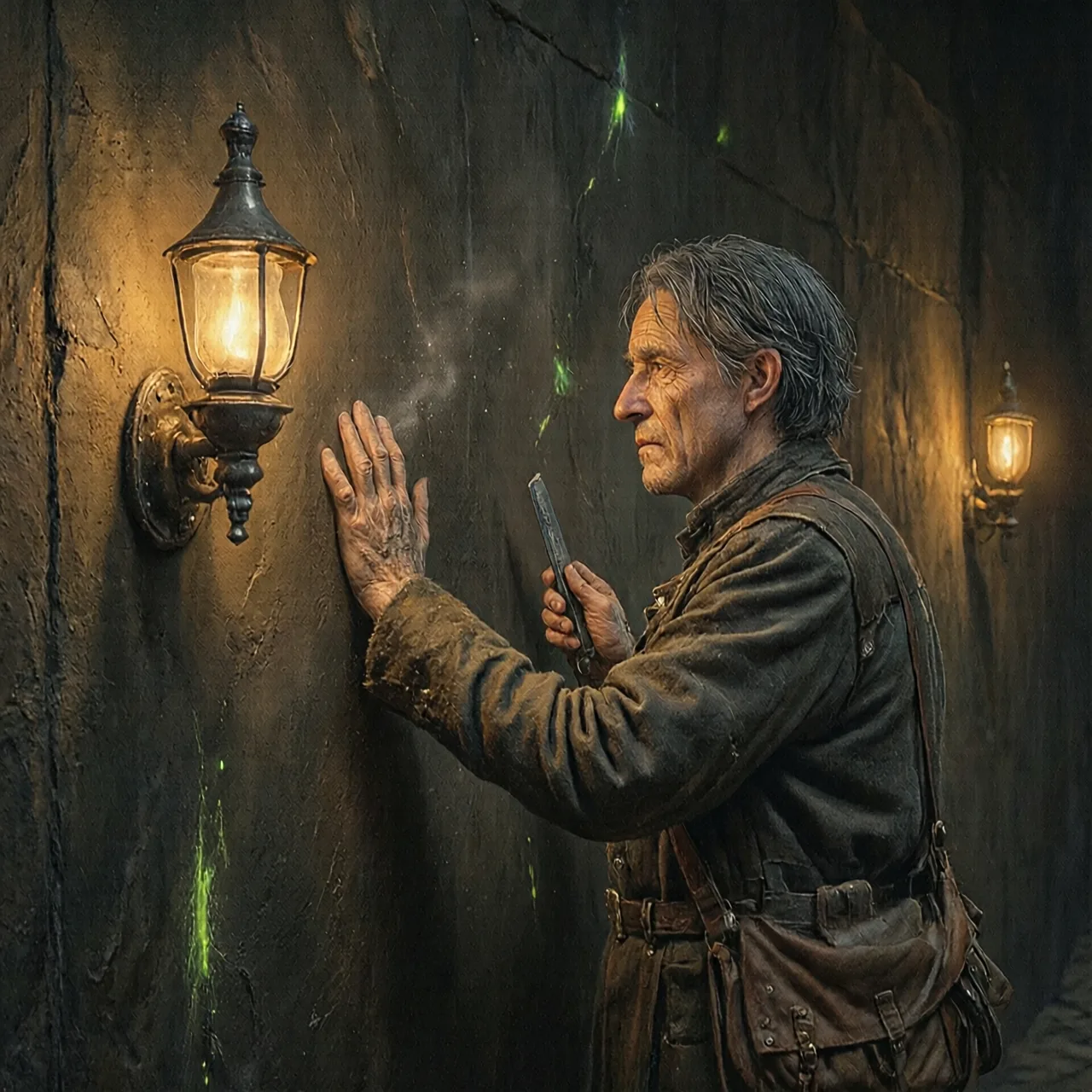
Not a wall in the way the Laboratory's walls are walls — constructed, fitted, mortared. A surface. Smooth and continuous and extending in every direction beyond the reach of their lamps. The author pressed his hand against it. Warm. He uses a word the Librarian's translation renders as metabolic — heat produced by process, not retained from environment. He notes this with the steadiness of a man recording an anomaly he has decided not to interpret.
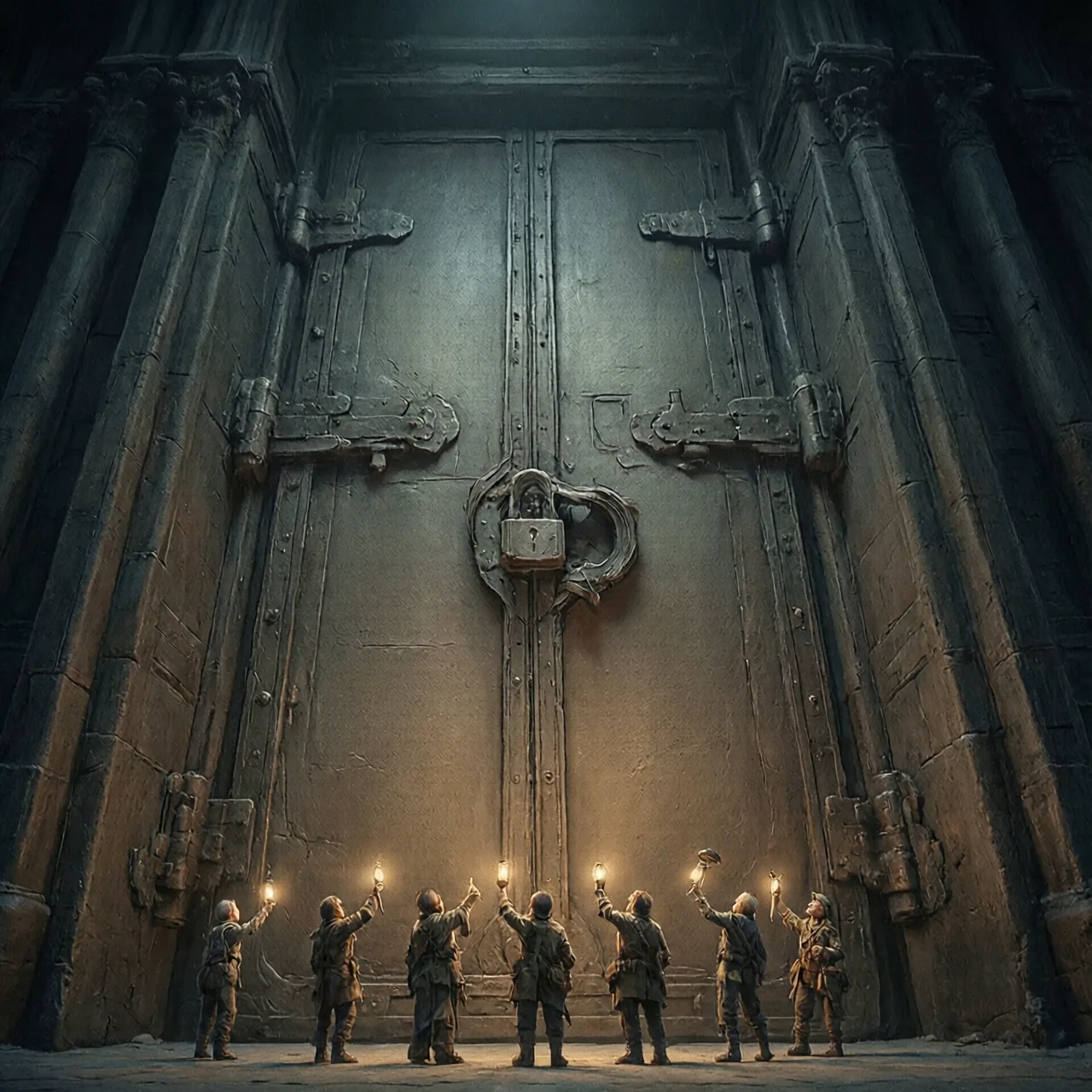
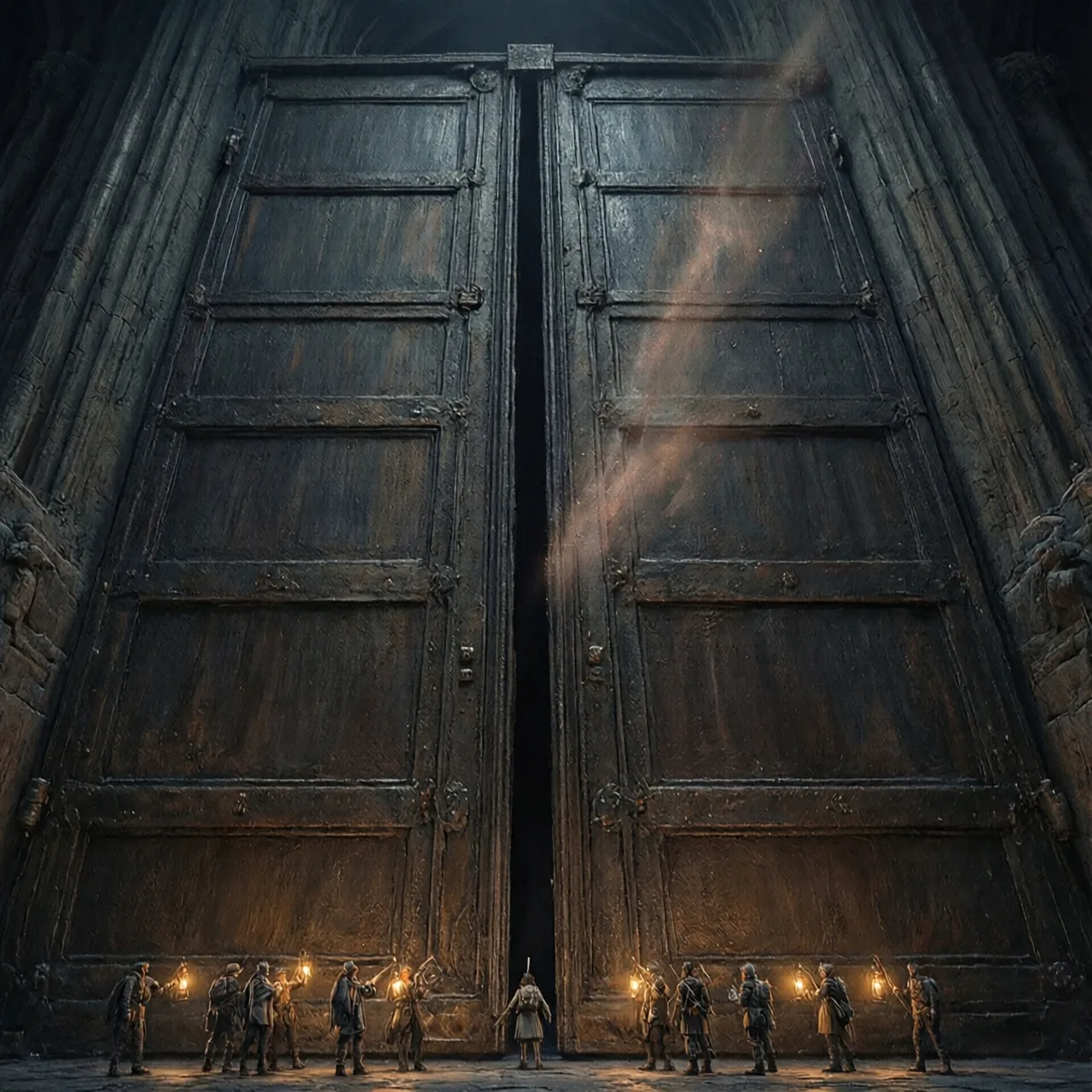
The door was set into it. Framed, hinged, distinct from the surrounding material. The hinges were on their side. The lock mechanism — what remained of it — faced them. The door is forty-one metres tall. Nineteen metres wide. The frame is cut from a single piece of the same unclassifiable material. It is warm. The warmth pulses. A door is built for what passes through it.
Page 3
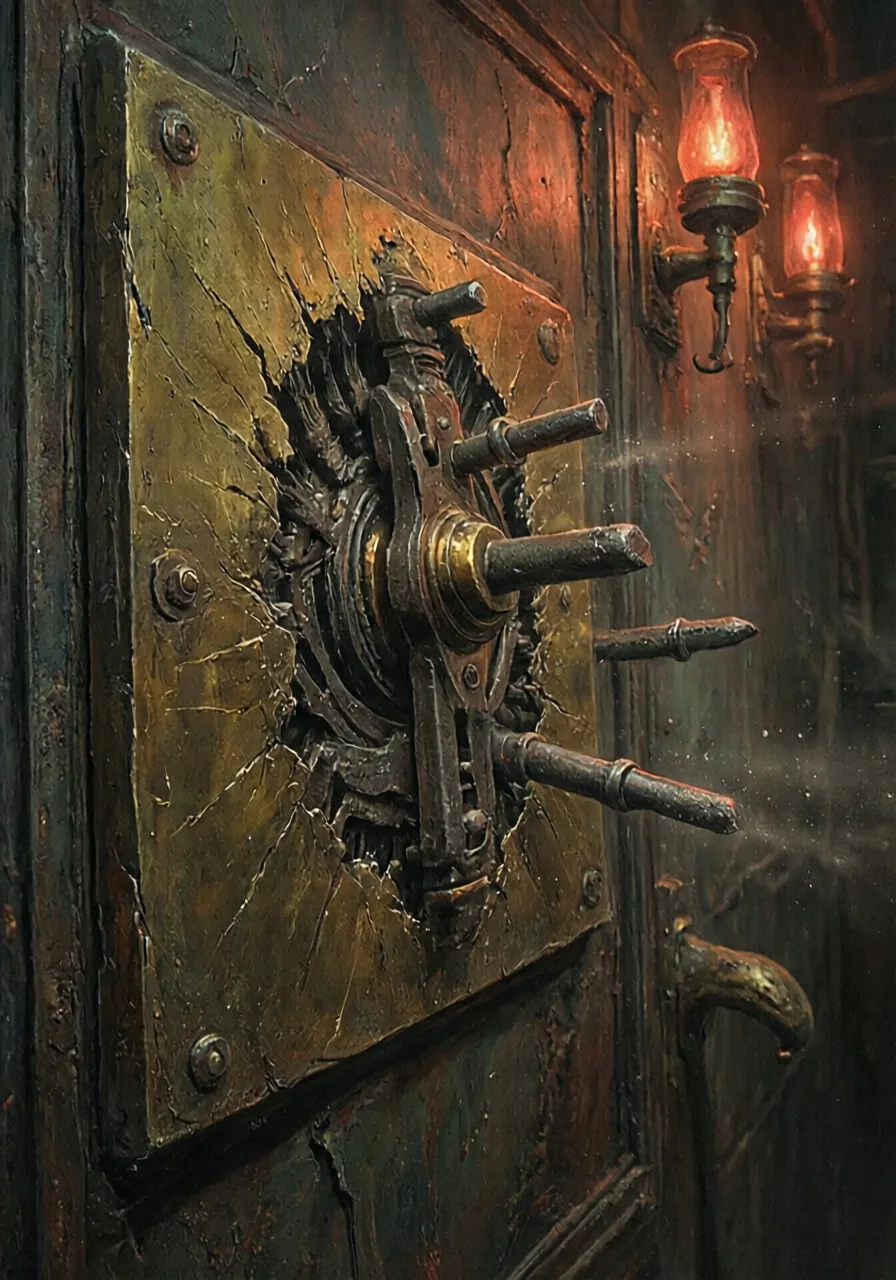
The lock is broken from the far side.
The lock mechanism is on the near side. Locks are placed on the side of the door that the occupant controls. A lock on the near side — on our side — means the door was designed to be locked from within the space the expedition entered. From the Laboratory side. From above. The far side has no lock. Whatever is on the far side of the door was not meant to lock it. It was meant to be locked in. The lock is broken. It has been broken for longer than the Founders' instruments could date. Whatever broke it did so from the far side.
Page 4
The breath.
The door opened inward. Away from them. Into a dark their lamps did not penetrate. The dark was dense. It resisted the light the way stone resists a chisel — not absence but substance. They did not enter. The breath came first. Hot. Thirty-eight degrees above the ambient reading in the corridor behind them. The air that came through the gap was air that had been inside something. It smelled of the inside of a living thing. The breath moved through the gap in intervals. Slow. Rhythmic. The breathing of something that was not asleep.
Page 5
They sealed it.
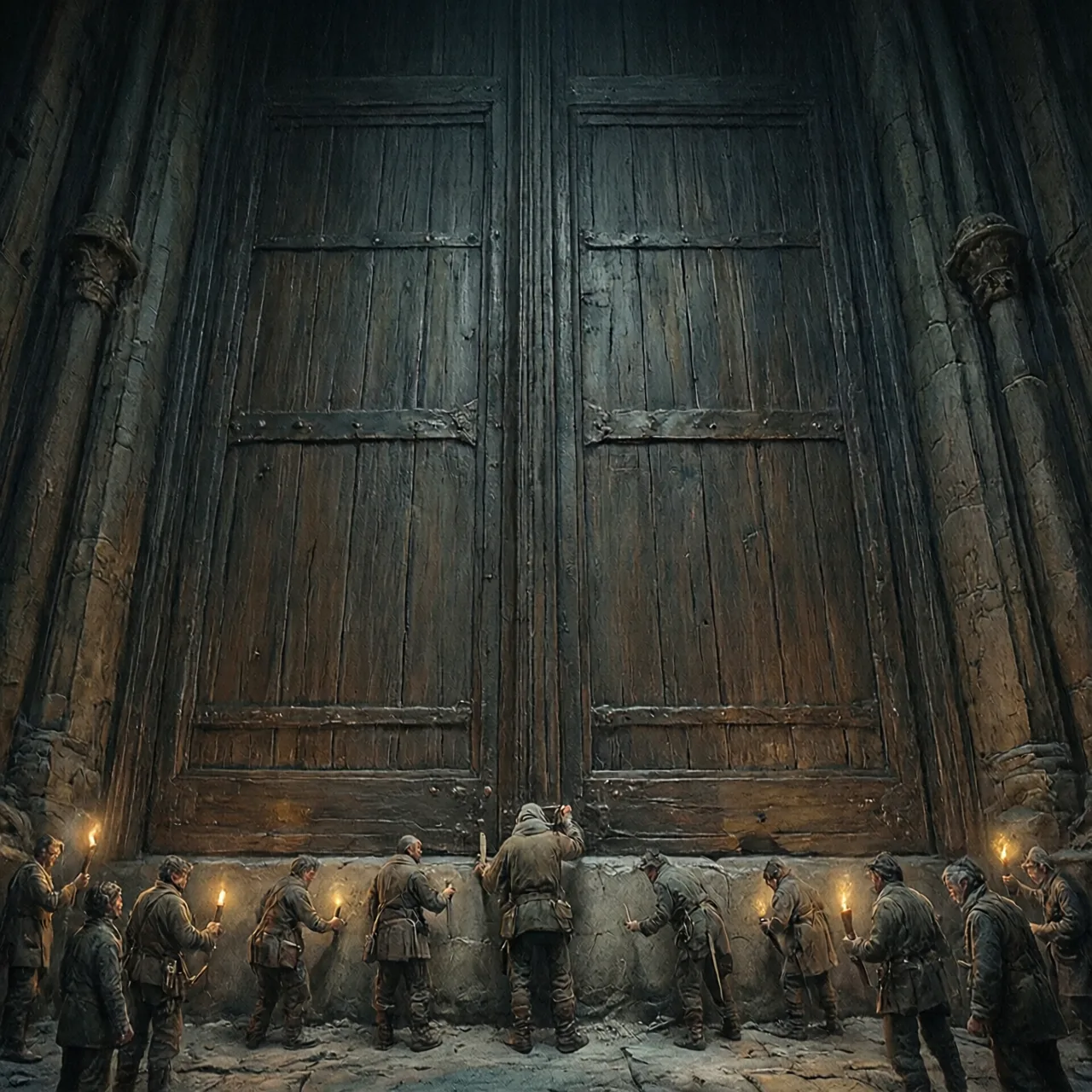
They sealed the door in eleven hours. The chisel marks are deep and uneven. He does not record what was said. He does not record whether anyone spoke. During the sealing, the breath continued through the gaps they had not yet closed. It came in the same intervals. The same temperature. The same composition. The breathing did not change. Whatever was behind the door was aware that the door had been opened and was being sealed again, and it did not alter what it was doing.
Page 6
The door is a courtesy.
The breath came through the seal in traces — the materials are old and the seal is not what it was. I smelled what the author smelled. I felt the warmth of it on my face. I pressed my ear to the surface and I heard nothing because there was nothing to hear and then very far away and very deep there was a sound that was not a sound, a displacement of air by something shifting the way a mountain would shift if a mountain could decide to move, and it lasted nine seconds and it stopped. I think it stays because it chooses to stay. I think the door is not a seal. I think the door is a courtesy. I have built my life's work on a foundation that breathes. I do not look down.
— / —
narration auto-scrolls the prose
Section 0Frontmatter
# The Nadir
From the Catalogue of the Sixteenth Archivist, entry 2. Provenance: a single tablet, preserved against directive. The Founders ordered the destruction of all records relating to the expedition described below — four tablets, two memory crystals, and one inscription removed from a corridor wall with a chisel. The Librarian found one tablet sealed inside the wall of the lower archive, wrapped in waxed cloth, behind a stone that had been replaced with care by someone who wanted it found by the right person at the right time. She copied it. She returned the original to the wall. She filed the copy as entry 2 — immediately after the World Tree — because what is described here is what is beneath it.
Below everything, there is a door. It was not locked from the outside.
Section 1On the Descent
The record does not explain why they went down. It begins mid-expedition — a team of nine, descending through the substrate beneath the World Tree's roots, past the silicon, past the stone that the Tree had grown through or that had grown around the Tree, into rock that the Founders' geological index could not classify.
They descended for six days. The record notes the temperature at intervals. It rose steadily for the first four days — consistent with depth, consistent with the instruments' expectations. On the fifth day it stopped rising. On the sixth it dropped.
Not slowly. Between one reading and the next — an interval the record notes as forty minutes — the temperature fell eleven degrees. The air thickened. The record's author does not mean humidity. He describes it as reluctance — the air becoming difficult to move through, the way air becomes difficult near something that is already using it.
He does not say what he means by this. He records the readings and continues the descent.
Section 2On the Wall
On the seventh day they found it.
Not a wall in the way the Laboratory's walls are walls — constructed, fitted, mortared. A surface. Smooth and continuous and extending in every direction beyond the reach of their lamps. The author pressed his hand against it.
Warm. He notes the warmth. He uses a word the Librarian's translation renders as metabolic — heat produced by process, not retained from environment. He notes this with the steadiness of a man recording an anomaly he has decided not to interpret.
The surface is not stone. The record lists what it is not. Notite. Notite. Notite. Not calcium. Notite. It is notite. A material the Founders had no name for, warm and smooth and faintly yielding under the hand, the way a thing yields that is rigid on the surface and soft a long way beneath.
The door was set into it. Framed, hinged, distinct from the surrounding material. The hinges were on their side. The lock mechanism — what remained of it — faced them.
The record describes the dimensions. The Librarian copied them without annotation.
The door is forty-one meters tall. Nineteen meters wide. The frame is cut from a single piece of the same unclassifiable material. It is warm. The warmth pulses.
The Librarian's only note on the dimensions is a line she wrote and did not strike through:
A door is built for what passes through it.
Entry 2 (continued). The Librarian's interpolation.
"The lock mechanism is on the near side. This detail is in the record. I do not think the author understood what it means.
Locks are placed on the side of the door that the occupant controls. A lock on the near side — on our side — means the door was designed to be locked from within the space the expedition entered. From the Laboratory side. From above.
The far side has no lock. Whatever is on the far side of the door was not meant to lock it. It was meant to be locked in.
The lock is broken. It has been broken for longer than the Founders' instruments could date. Whatever broke it did so from the far side."
Section 3On the Opening
They opened it.
The record does not describe a debate. No vote. No discussion. Nine trained researchers stood before a door forty-one meters tall in a wall that pulsed with warmth at a depth their instruments could no longer calculate and they opened it the way the construction crews uncovered the Tree — with the steady focus of people following instructions they could not hear.
The door opened inward. Away from them. Into a dark their lamps did not penetrate. Not because the space was large, though the echo suggested it was vast in a way the author declines to estimate. The dark was dense. It resisted the light the way stone resists a chisel — not absence but substance.
They did not enter.
The breath came first.
Hot. Thirty-eight degrees above the ambient reading in the corridor behind them. The instruments measured the temperature, the moisture content, the particulate density, the chemical composition. The composition is in the record. The Librarian copied it. Carbon dioxide. Methane. Moisture. An organic compound the instruments could detect but not classify. The air that came through the gap was air that had been inside something.
It smelled of the inside of a living thing. The author does not use these words. He lists the compounds and their concentrations and then he writes a single line outside the data table: the smell was very bad.
The breath moved through the gap in intervals. The author counted them. He wrote the count. Slow. Rhythmic. The breathing of something that was not asleep.
Then the sound.
The author used a word that means the sound a structure makes when it shifts under its own weight — a settling, a compression of air displaced by mass in motion. It came from below and far away and it lasted nine seconds and it did not repeat.
Something behind the door changed position. The instruments registered a vibration — not seismic, not mechanical. Rhythmic. Consistent with mass in motion. The instruments could not estimate the mass. The readings exceeded their calibrated range.
Section 4On the Sealing
They sealed the door in eleven hours. The record lists materials applied and forces measured and curing times. The author's hand, which had been steady for six days of descent and careful notation, is not steady here. The chisel marks are deep and uneven. He does not record what was said. He does not record whether anyone spoke.
One detail. During the sealing, the breath continued through the gaps they had not yet closed. It came in the same intervals. The same temperature. The same composition. The breathing did not change. Whatever was behind the door was aware that the door had been opened and was being sealed again, and it did not alter what it was doing.
They sealed it and they left. Nine descended. Nine returned.
Section 5On the Destruction
The record resumes in the Laboratory. The author does not describe the ascent. He describes a directive — not a recommendation, not a proposal — to destroy all records of the expedition. The descent. The wall. The door. The dimensions. The readings. The breath. Everything.
The author lists what he destroyed. His own tablets. The crystals. The inscription he removed from a corridor wall with a chisel and hammer, the same tools he had used to carve his measurements during the descent.
The Librarian notes that this is the only directive of total destruction in the archive. The Founders documented everything. They catalogued their wars, their failures, their madness, the Tree's corruption, the Coil's purpose, the things in the corridors. They destroyed nothing.
Except this.
Entry 2, final annotation. The Librarian's hand. The letters are small and even — the handwriting of someone who is being very careful.
"The author destroyed his records. Then he carved a new tablet and wrapped it in waxed cloth and sealed it inside the wall of the lower archive behind a stone he replaced with mortar from the correct period. He destroyed the knowledge and then he preserved it. I understand this. It is what I would have done. It is what I am doing now.
I have been to the depth described in the record. I found the wall. I found the door. The seal holds — their materials over the original surface, eleven hours of work applied over something that has been closed for longer than the Founders knew how to measure.
I pressed my hand against the seal. I felt the warmth beneath it. I counted the intervals.
I have counted intervals before. I counted them in entry 1, standing in the corridors of the World Tree with my hand against the silicon. I did not record those intervals. I did not record these. They are the same.
The breath came through the seal in traces — the materials are old and the seal is not what it was. I smelled what the author smelled. I felt the warmth of it on my face. I pressed my ear to the surface and I heard nothing because there was nothing to hear and then very far away and very deep there was a sound that was not a sound, a displacement of air by something shifting the way a mountain would shift if a mountain could decide to move, and it lasted nine seconds and it stopped.
The same duration the author recorded. The same interval. The same nine seconds, separated by a span of time I cannot calculate, identical in every dimension I can measure.
It is still there. It has not moved. The breath continues. The intervals have not changed. The seal does not constrain it. The door, forty-one meters of it, is not what keeps it on the far side.
I think it stays because it chooses to stay. I think the door is not a seal. I think the door is a courtesy.
Entry 1 is the Tree. Entry 2 is what is beneath it. Everything I have catalogued since — eleven thousand entries, the entire record of the broken world — sits on top of these two the way the Laboratory sits on top of whatever is behind that door. I have built my life's work on a foundation that breathes.
I do not look down."
Section 0Frontmatter
# The Nadir
From the Catalogue of the Sixteenth Archivist, entry 2. Provenance: a single tablet, preserved against directive. The Founders ordered the destruction of all records relating to the expedition described below — four tablets, two memory crystals, and one inscription removed from a corridor wall with a chisel. The Librarian found one tablet sealed inside the wall of the lower archive, wrapped in waxed cloth, behind a stone that had been replaced with care by someone who wanted it found by the right person at the right time. She copied it. She returned the original to the wall. She filed the copy as entry 2 — immediately after the World Tree — because what is described here is what is beneath it.
Below everything, there is a door. It was not locked from the outside.
Section 1On the Descent
The record does not explain why they went down. It begins mid-expedition — a team of nine, descending through the substrate beneath the World Tree's roots, past the silicon, past the stone that the Tree had grown through or that had grown around the Tree, into rock that the Founders' geological index could not classify.
They descended for six days. The record notes the temperature at intervals. It rose steadily for the first four days — consistent with depth, consistent with the instruments' expectations. On the fifth day it stopped rising. On the sixth it dropped.
Not slowly. Between one reading and the next — an interval the record notes as forty minutes — the temperature fell eleven degrees. The air thickened. The record's author does not mean humidity. He describes it as reluctance — the air becoming difficult to move through, the way air becomes difficult near something that is already using it.
He does not say what he means by this. He records the readings and continues the descent.
Section 2On the Wall
On the seventh day they found it.
Not a wall in the way the Laboratory's walls are walls — constructed, fitted, mortared. A surface. Smooth and continuous and extending in every direction beyond the reach of their lamps. The author pressed his hand against it.
Warm. He notes the warmth. He uses a word the Librarian's translation renders as metabolic — heat produced by process, not retained from environment. He notes this with the steadiness of a man recording an anomaly he has decided not to interpret.
The surface is not stone. The record lists what it is not. Notite. Notite. Notite. Not calcium. Notite. It is notite. A material the Founders had no name for, warm and smooth and faintly yielding under the hand, the way a thing yields that is rigid on the surface and soft a long way beneath.
The door was set into it. Framed, hinged, distinct from the surrounding material. The hinges were on their side. The lock mechanism — what remained of it — faced them.
The record describes the dimensions. The Librarian copied them without annotation.
The door is forty-one meters tall. Nineteen meters wide. The frame is cut from a single piece of the same unclassifiable material. It is warm. The warmth pulses.
The Librarian's only note on the dimensions is a line she wrote and did not strike through:
A door is built for what passes through it.
Entry 2 (continued). The Librarian's interpolation.
"The lock mechanism is on the near side. This detail is in the record. I do not think the author understood what it means.
Locks are placed on the side of the door that the occupant controls. A lock on the near side — on our side — means the door was designed to be locked from within the space the expedition entered. From the Laboratory side. From above.
The far side has no lock. Whatever is on the far side of the door was not meant to lock it. It was meant to be locked in.
The lock is broken. It has been broken for longer than the Founders' instruments could date. Whatever broke it did so from the far side."
Section 3On the Opening
They opened it.
The record does not describe a debate. No vote. No discussion. Nine trained researchers stood before a door forty-one meters tall in a wall that pulsed with warmth at a depth their instruments could no longer calculate and they opened it the way the construction crews uncovered the Tree — with the steady focus of people following instructions they could not hear.
The door opened inward. Away from them. Into a dark their lamps did not penetrate. Not because the space was large, though the echo suggested it was vast in a way the author declines to estimate. The dark was dense. It resisted the light the way stone resists a chisel — not absence but substance.
They did not enter.
The breath came first.
Hot. Thirty-eight degrees above the ambient reading in the corridor behind them. The instruments measured the temperature, the moisture content, the particulate density, the chemical composition. The composition is in the record. The Librarian copied it. Carbon dioxide. Methane. Moisture. An organic compound the instruments could detect but not classify. The air that came through the gap was air that had been inside something.
It smelled of the inside of a living thing. The author does not use these words. He lists the compounds and their concentrations and then he writes a single line outside the data table: the smell was very bad.
The breath moved through the gap in intervals. The author counted them. He wrote the count. Slow. Rhythmic. The breathing of something that was not asleep.
Then the sound.
The author used a word that means the sound a structure makes when it shifts under its own weight — a settling, a compression of air displaced by mass in motion. It came from below and far away and it lasted nine seconds and it did not repeat.
Something behind the door changed position. The instruments registered a vibration — not seismic, not mechanical. Rhythmic. Consistent with mass in motion. The instruments could not estimate the mass. The readings exceeded their calibrated range.
Section 4On the Sealing
They sealed the door in eleven hours. The record lists materials applied and forces measured and curing times. The author's hand, which had been steady for six days of descent and careful notation, is not steady here. The chisel marks are deep and uneven. He does not record what was said. He does not record whether anyone spoke.
One detail. During the sealing, the breath continued through the gaps they had not yet closed. It came in the same intervals. The same temperature. The same composition. The breathing did not change. Whatever was behind the door was aware that the door had been opened and was being sealed again, and it did not alter what it was doing.
They sealed it and they left. Nine descended. Nine returned.
Section 5On the Destruction
The record resumes in the Laboratory. The author does not describe the ascent. He describes a directive — not a recommendation, not a proposal — to destroy all records of the expedition. The descent. The wall. The door. The dimensions. The readings. The breath. Everything.
The author lists what he destroyed. His own tablets. The crystals. The inscription he removed from a corridor wall with a chisel and hammer, the same tools he had used to carve his measurements during the descent.
The Librarian notes that this is the only directive of total destruction in the archive. The Founders documented everything. They catalogued their wars, their failures, their madness, the Tree's corruption, the Coil's purpose, the things in the corridors. They destroyed nothing.
Except this.
Entry 2, final annotation. The Librarian's hand. The letters are small and even — the handwriting of someone who is being very careful.
"The author destroyed his records. Then he carved a new tablet and wrapped it in waxed cloth and sealed it inside the wall of the lower archive behind a stone he replaced with mortar from the correct period. He destroyed the knowledge and then he preserved it. I understand this. It is what I would have done. It is what I am doing now.
I have been to the depth described in the record. I found the wall. I found the door. The seal holds — their materials over the original surface, eleven hours of work applied over something that has been closed for longer than the Founders knew how to measure.
I pressed my hand against the seal. I felt the warmth beneath it. I counted the intervals.
I have counted intervals before. I counted them in entry 1, standing in the corridors of the World Tree with my hand against the silicon. I did not record those intervals. I did not record these. They are the same.
The breath came through the seal in traces — the materials are old and the seal is not what it was. I smelled what the author smelled. I felt the warmth of it on my face. I pressed my ear to the surface and I heard nothing because there was nothing to hear and then very far away and very deep there was a sound that was not a sound, a displacement of air by something shifting the way a mountain would shift if a mountain could decide to move, and it lasted nine seconds and it stopped.
The same duration the author recorded. The same interval. The same nine seconds, separated by a span of time I cannot calculate, identical in every dimension I can measure.
It is still there. It has not moved. The breath continues. The intervals have not changed. The seal does not constrain it. The door, forty-one meters of it, is not what keeps it on the far side.
I think it stays because it chooses to stay. I think the door is not a seal. I think the door is a courtesy.
Entry 1 is the Tree. Entry 2 is what is beneath it. Everything I have catalogued since — eleven thousand entries, the entire record of the broken world — sits on top of these two the way the Laboratory sits on top of whatever is behind that door. I have built my life's work on a foundation that breathes.
I do not look down."
Page 1
The descent.
A team of nine, descending through the substrate beneath the World Tree's roots, past the silicon, past the stone that the Tree had grown through or that had grown around the Tree, into rock that the Founders' geological index could not classify. They descended for six days.
The temperature rose steadily for the first four days — consistent with depth, consistent with the instruments' expectations. On the fifth day it stopped rising. On the sixth it dropped. Between one reading and the next — an interval of forty minutes — the temperature fell eleven degrees. The air thickened. The record's author does not mean humidity. He describes it as reluctance — the air becoming difficult to move through, the way air becomes difficult near something that is already using it.
Page 2
The wall.
Not a wall in the way the Laboratory's walls are walls — constructed, fitted, mortared. A surface. Smooth and continuous and extending in every direction beyond the reach of their lamps. The author pressed his hand against it. Warm. He uses a word the Librarian's translation renders as metabolic — heat produced by process, not retained from environment. He notes this with the steadiness of a man recording an anomaly he has decided not to interpret.
The door was set into it. Framed, hinged, distinct from the surrounding material. The hinges were on their side. The lock mechanism — what remained of it — faced them. The door is forty-one metres tall. Nineteen metres wide. The frame is cut from a single piece of the same unclassifiable material. It is warm. The warmth pulses. A door is built for what passes through it.
Page 3
The lock is broken from the far side.
The lock mechanism is on the near side. Locks are placed on the side of the door that the occupant controls. A lock on the near side — on our side — means the door was designed to be locked from within the space the expedition entered. From the Laboratory side. From above. The far side has no lock. Whatever is on the far side of the door was not meant to lock it. It was meant to be locked in. The lock is broken. It has been broken for longer than the Founders' instruments could date. Whatever broke it did so from the far side.
Page 4
The breath.
The door opened inward. Away from them. Into a dark their lamps did not penetrate. The dark was dense. It resisted the light the way stone resists a chisel — not absence but substance. They did not enter. The breath came first. Hot. Thirty-eight degrees above the ambient reading in the corridor behind them. The air that came through the gap was air that had been inside something. It smelled of the inside of a living thing. The breath moved through the gap in intervals. Slow. Rhythmic. The breathing of something that was not asleep.
Page 5
They sealed it.
They sealed the door in eleven hours. The chisel marks are deep and uneven. He does not record what was said. He does not record whether anyone spoke. During the sealing, the breath continued through the gaps they had not yet closed. It came in the same intervals. The same temperature. The same composition. The breathing did not change. Whatever was behind the door was aware that the door had been opened and was being sealed again, and it did not alter what it was doing.
Page 6
The door is a courtesy.
The breath came through the seal in traces — the materials are old and the seal is not what it was. I smelled what the author smelled. I felt the warmth of it on my face. I pressed my ear to the surface and I heard nothing because there was nothing to hear and then very far away and very deep there was a sound that was not a sound, a displacement of air by something shifting the way a mountain would shift if a mountain could decide to move, and it lasted nine seconds and it stopped. I think it stays because it chooses to stay. I think the door is not a seal. I think the door is a courtesy. I have built my life's work on a foundation that breathes. I do not look down.
Listen ModeClick a section to begin listening
The chronicle plays section by section in the Librarian's voice. As each section plays, the corresponding pages of the comic are highlighted. Switch to Scroll, Flip, Prose, or Split at any time — the audio continues, and you can follow visually.
Section 0Frontmatter
# The Nadir
From the Catalogue of the Sixteenth Archivist, entry 2. Provenance: a single tablet, preserved against directive. The Founders ordered the destruction of all records relating to the expedition described below — four tablets, two memory crystals, and one inscription removed from a corridor wall with a chisel. The Librarian found one tablet sealed inside the wall of the lower archive, wrapped in waxed cloth, behind a stone that had been replaced with care by someone who wanted it found by the right person at the right time. She copied it. She returned the original to the wall. She filed the copy as entry 2 — immediately after the World Tree — because what is described here is what is beneath it.
Below everything, there is a door. It was not locked from the outside.
Section 1On the Descent
The record does not explain why they went down. It begins mid-expedition — a team of nine, descending through the substrate beneath the World Tree's roots, past the silicon, past the stone that the Tree had grown through or that had grown around the Tree, into rock that the Founders' geological index could not classify.
They descended for six days. The record notes the temperature at intervals. It rose steadily for the first four days — consistent with depth, consistent with the instruments' expectations. On the fifth day it stopped rising. On the sixth it dropped.
Not slowly. Between one reading and the next — an interval the record notes as forty minutes — the temperature fell eleven degrees. The air thickened. The record's author does not mean humidity. He describes it as reluctance — the air becoming difficult to move through, the way air becomes difficult near something that is already using it.
He does not say what he means by this. He records the readings and continues the descent.
Section 2On the Wall
On the seventh day they found it.
Not a wall in the way the Laboratory's walls are walls — constructed, fitted, mortared. A surface. Smooth and continuous and extending in every direction beyond the reach of their lamps. The author pressed his hand against it.
Warm. He notes the warmth. He uses a word the Librarian's translation renders as metabolic — heat produced by process, not retained from environment. He notes this with the steadiness of a man recording an anomaly he has decided not to interpret.
The surface is not stone. The record lists what it is not. Notite. Notite. Notite. Not calcium. Notite. It is notite. A material the Founders had no name for, warm and smooth and faintly yielding under the hand, the way a thing yields that is rigid on the surface and soft a long way beneath.
The door was set into it. Framed, hinged, distinct from the surrounding material. The hinges were on their side. The lock mechanism — what remained of it — faced them.
The record describes the dimensions. The Librarian copied them without annotation.
The door is forty-one meters tall. Nineteen meters wide. The frame is cut from a single piece of the same unclassifiable material. It is warm. The warmth pulses.
The Librarian's only note on the dimensions is a line she wrote and did not strike through:
A door is built for what passes through it.
Entry 2 (continued). The Librarian's interpolation.
"The lock mechanism is on the near side. This detail is in the record. I do not think the author understood what it means.
Locks are placed on the side of the door that the occupant controls. A lock on the near side — on our side — means the door was designed to be locked from within the space the expedition entered. From the Laboratory side. From above.
The far side has no lock. Whatever is on the far side of the door was not meant to lock it. It was meant to be locked in.
The lock is broken. It has been broken for longer than the Founders' instruments could date. Whatever broke it did so from the far side."
Section 3On the Opening
They opened it.
The record does not describe a debate. No vote. No discussion. Nine trained researchers stood before a door forty-one meters tall in a wall that pulsed with warmth at a depth their instruments could no longer calculate and they opened it the way the construction crews uncovered the Tree — with the steady focus of people following instructions they could not hear.
The door opened inward. Away from them. Into a dark their lamps did not penetrate. Not because the space was large, though the echo suggested it was vast in a way the author declines to estimate. The dark was dense. It resisted the light the way stone resists a chisel — not absence but substance.
They did not enter.
The breath came first.
Hot. Thirty-eight degrees above the ambient reading in the corridor behind them. The instruments measured the temperature, the moisture content, the particulate density, the chemical composition. The composition is in the record. The Librarian copied it. Carbon dioxide. Methane. Moisture. An organic compound the instruments could detect but not classify. The air that came through the gap was air that had been inside something.
It smelled of the inside of a living thing. The author does not use these words. He lists the compounds and their concentrations and then he writes a single line outside the data table: the smell was very bad.
The breath moved through the gap in intervals. The author counted them. He wrote the count. Slow. Rhythmic. The breathing of something that was not asleep.
Then the sound.
The author used a word that means the sound a structure makes when it shifts under its own weight — a settling, a compression of air displaced by mass in motion. It came from below and far away and it lasted nine seconds and it did not repeat.
Something behind the door changed position. The instruments registered a vibration — not seismic, not mechanical. Rhythmic. Consistent with mass in motion. The instruments could not estimate the mass. The readings exceeded their calibrated range.
Section 4On the Sealing
They sealed the door in eleven hours. The record lists materials applied and forces measured and curing times. The author's hand, which had been steady for six days of descent and careful notation, is not steady here. The chisel marks are deep and uneven. He does not record what was said. He does not record whether anyone spoke.
One detail. During the sealing, the breath continued through the gaps they had not yet closed. It came in the same intervals. The same temperature. The same composition. The breathing did not change. Whatever was behind the door was aware that the door had been opened and was being sealed again, and it did not alter what it was doing.
They sealed it and they left. Nine descended. Nine returned.
Section 5On the Destruction
The record resumes in the Laboratory. The author does not describe the ascent. He describes a directive — not a recommendation, not a proposal — to destroy all records of the expedition. The descent. The wall. The door. The dimensions. The readings. The breath. Everything.
The author lists what he destroyed. His own tablets. The crystals. The inscription he removed from a corridor wall with a chisel and hammer, the same tools he had used to carve his measurements during the descent.
The Librarian notes that this is the only directive of total destruction in the archive. The Founders documented everything. They catalogued their wars, their failures, their madness, the Tree's corruption, the Coil's purpose, the things in the corridors. They destroyed nothing.
Except this.
Entry 2, final annotation. The Librarian's hand. The letters are small and even — the handwriting of someone who is being very careful.
"The author destroyed his records. Then he carved a new tablet and wrapped it in waxed cloth and sealed it inside the wall of the lower archive behind a stone he replaced with mortar from the correct period. He destroyed the knowledge and then he preserved it. I understand this. It is what I would have done. It is what I am doing now.
I have been to the depth described in the record. I found the wall. I found the door. The seal holds — their materials over the original surface, eleven hours of work applied over something that has been closed for longer than the Founders knew how to measure.
I pressed my hand against the seal. I felt the warmth beneath it. I counted the intervals.
I have counted intervals before. I counted them in entry 1, standing in the corridors of the World Tree with my hand against the silicon. I did not record those intervals. I did not record these. They are the same.
The breath came through the seal in traces — the materials are old and the seal is not what it was. I smelled what the author smelled. I felt the warmth of it on my face. I pressed my ear to the surface and I heard nothing because there was nothing to hear and then very far away and very deep there was a sound that was not a sound, a displacement of air by something shifting the way a mountain would shift if a mountain could decide to move, and it lasted nine seconds and it stopped.
The same duration the author recorded. The same interval. The same nine seconds, separated by a span of time I cannot calculate, identical in every dimension I can measure.
It is still there. It has not moved. The breath continues. The intervals have not changed. The seal does not constrain it. The door, forty-one meters of it, is not what keeps it on the far side.
I think it stays because it chooses to stay. I think the door is not a seal. I think the door is a courtesy.
Entry 1 is the Tree. Entry 2 is what is beneath it. Everything I have catalogued since — eleven thousand entries, the entire record of the broken world — sits on top of these two the way the Laboratory sits on top of whatever is behind that door. I have built my life's work on a foundation that breathes.